
This post may contain affiliate links. Please read our disclosure policy.
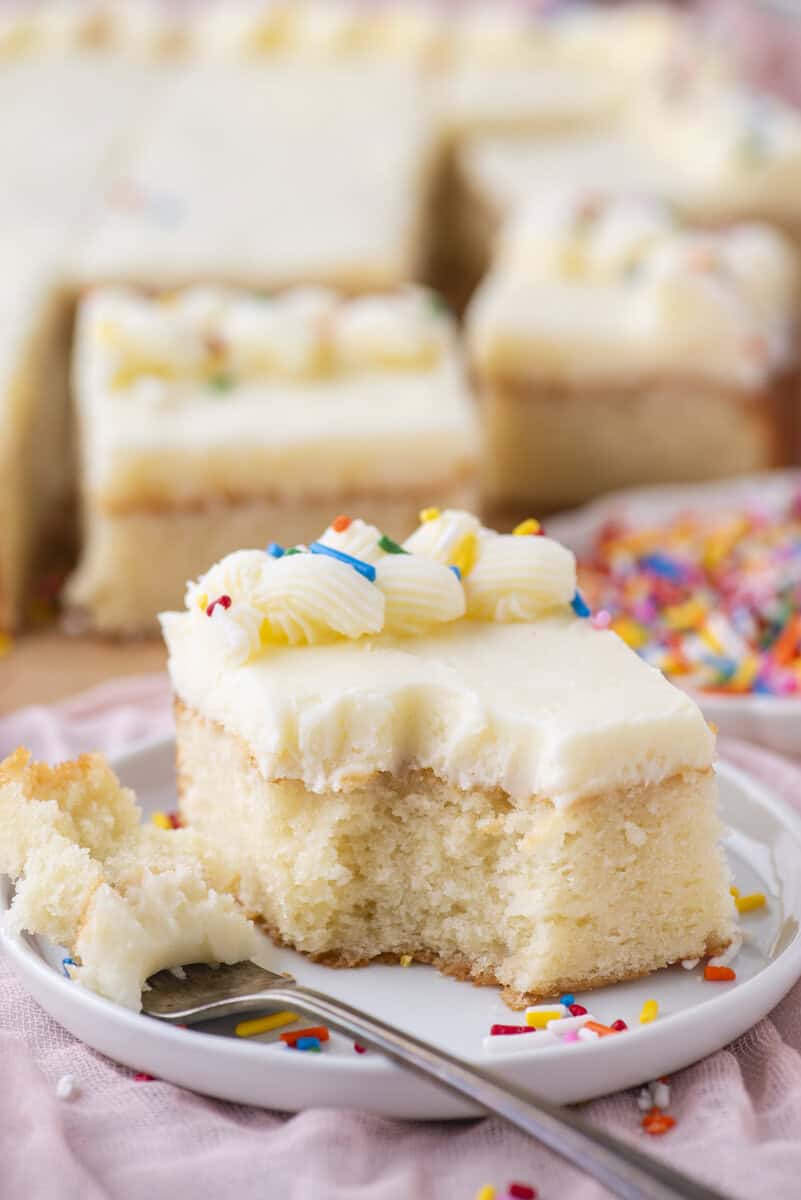
Layer cakes are gorgeous but not always realistic on a Tuesday night or at a crowded backyard party. That’s why I took my most popular white cake recipe and tested it specifically for a 9×13 pan. I tested the batter fit, the bake time, and the texture multiple times so you walk into this knowing exactly what to expect. One pan, zero fuss, and a white cake that actually tastes as good as it looks.
Why I’m Making a 9×13 inch Cake Series
I polled my Instagram followers and 70% of them said they prefer to make 9×13 inch cakes over layer cakes. So I’m doing something about it. I’m going through my best layer cake recipes one by one, testing each of them in a 9×13 pan, nailing down the bake time, and making sure the results are just as good. First up: my white cake, and spoiler, it passed with flying colors.
This recipe actually started with a reader question. Someone asked if my classic vanilla cake could be turned into a white cake and instead of guessing, I tested it. After some experimenting, swapping 5 egg whites for 4 whole eggs was the move. The result was a cake with a noticeably lighter crumb, a beautifully pale color, and a texture that’s soft and fluffy without being fragile. It became one of my most loved layer cake recipes, and now it works just as beautifully in a 9×13 pan.
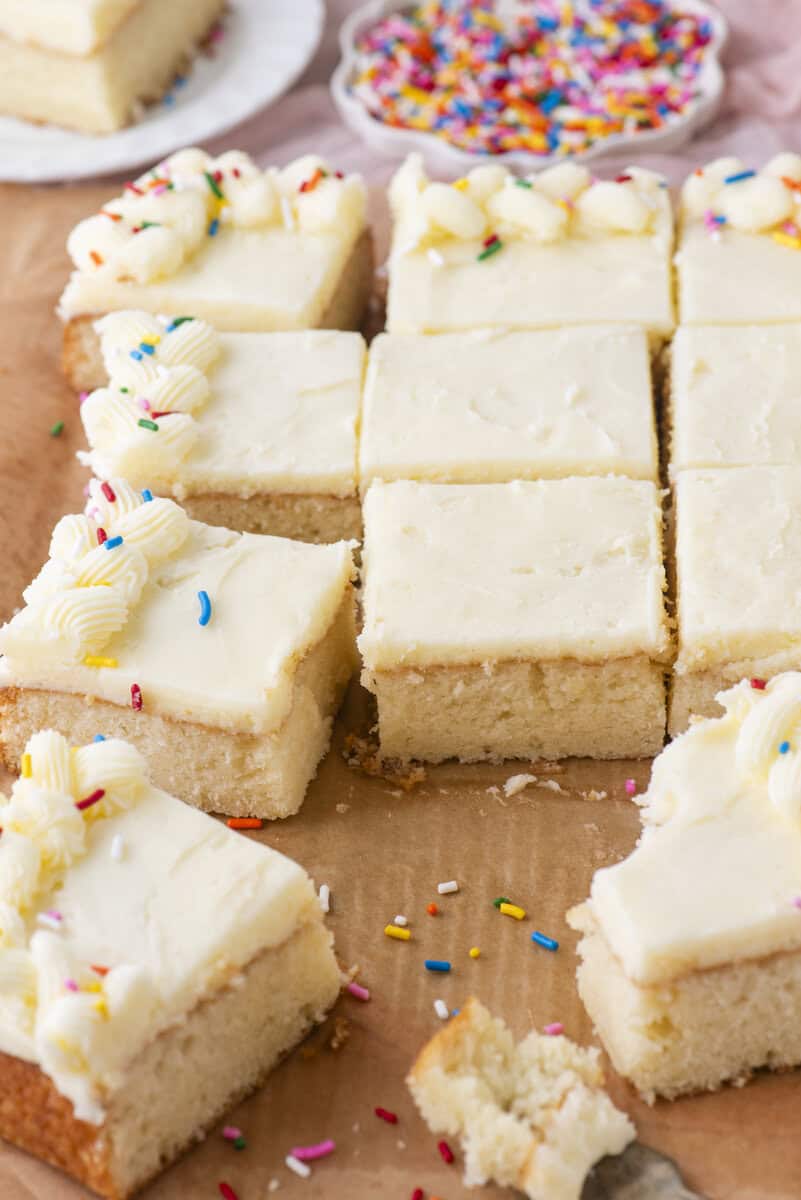
When I converted this to a 9×13, my first concern was whether the batter volume would be right. It fit perfectly without any overflow or underfilling, and the bake time landed right around 32-39 minutes. I tested it multiple times to make sure that wasn’t a fluke. Whether you use a light pan or a dark pan, I’ve got you covered on timing because those two can behave very differently in the oven.
I’ve been baking and testing recipes for over a decade, and this is one of those recipes I’d confidently put in front of anyone. Whether it’s for a birthday, a potluck, or just a Tuesday that needs cake, this 9×13 white cake is reliable, classic, and genuinely delicious.
What Makes This a True White Cake (Not Just a Pale Yellow One)
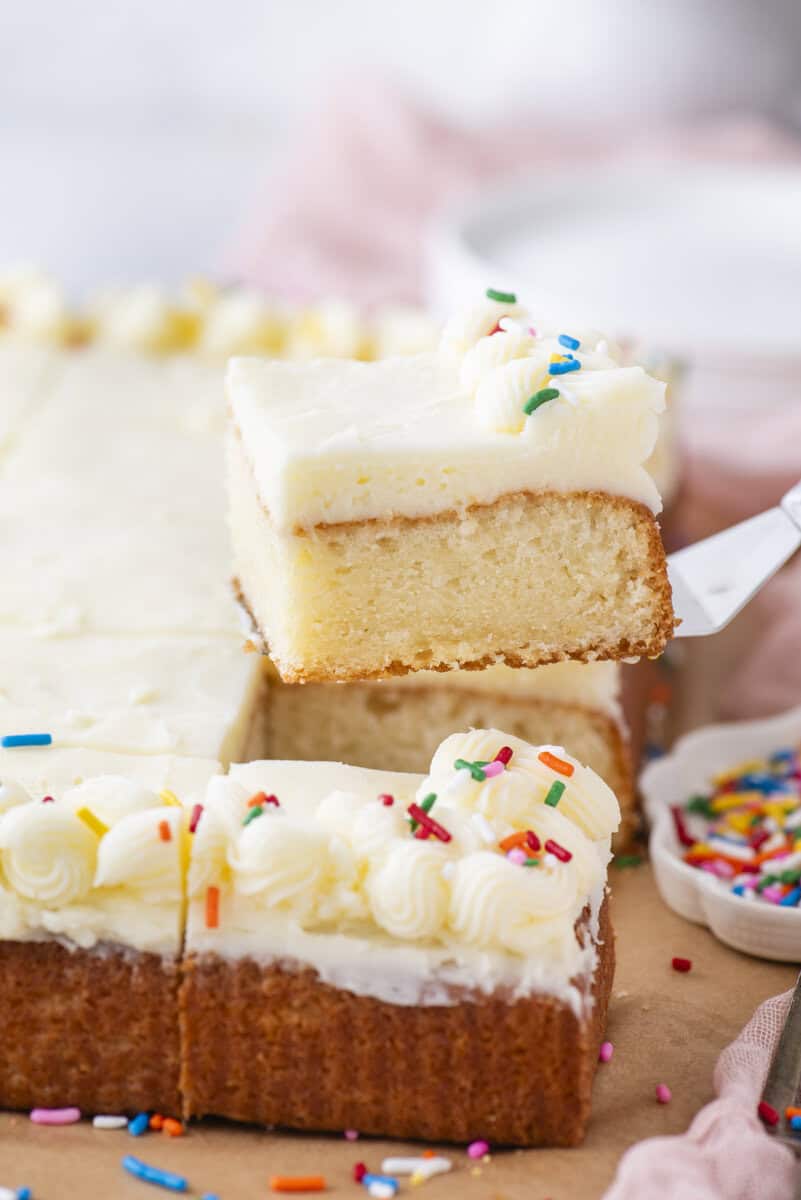
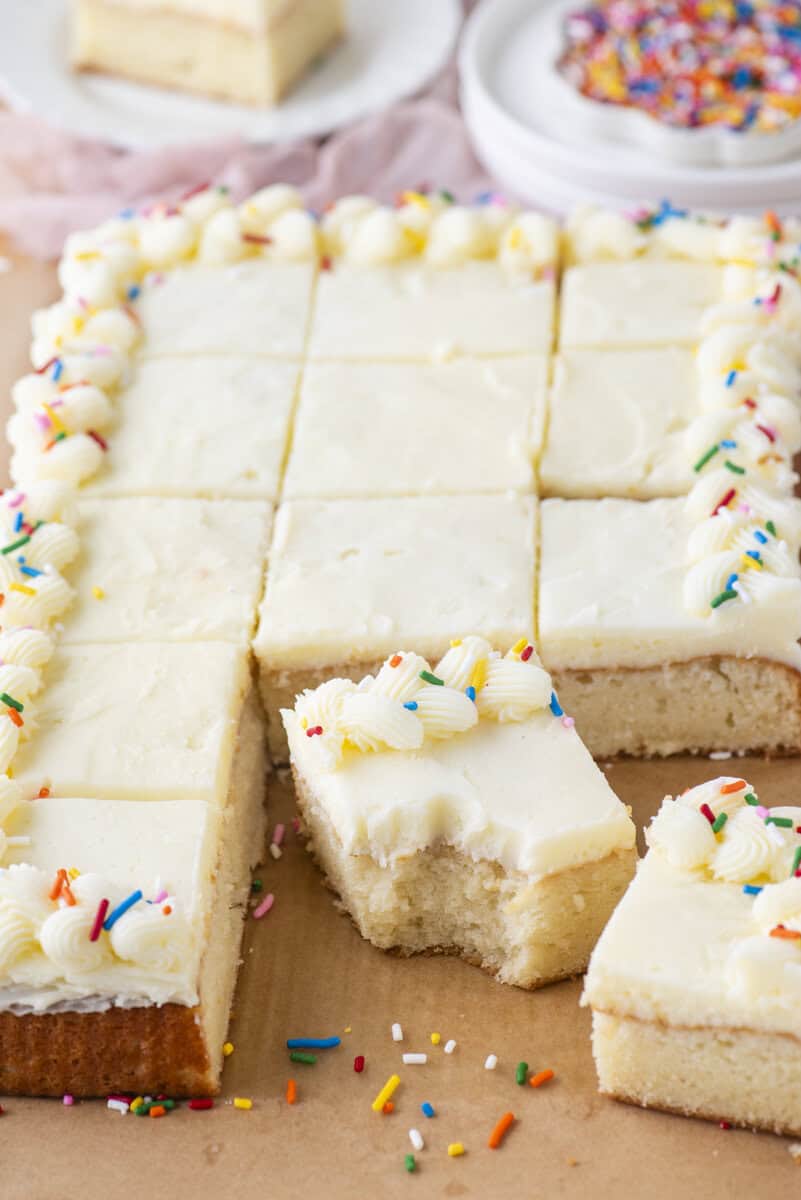
A lot of recipes call themselves white cake but still use regular vanilla extract and whole eggs, and then you cut into the finished cake and the crumb is yellow. There is nothing wrong with yellow cake but if you are going for white, the details matter.
Egg whites instead of whole eggs is the big one. Yolks carry fat and pigment, and both of those affect the color and texture of your bake. When you remove them, the cake gets lighter in color and in crumb.
The second detail is clear vanilla extract. Regular vanilla extract is amber colored and it will tint your batter. Clear vanilla keeps everything looking true white from the inside out. Neither of these swaps is complicated, but they are both intentional, and that is what separates a white cake from a vanilla cake that happens to be light colored.
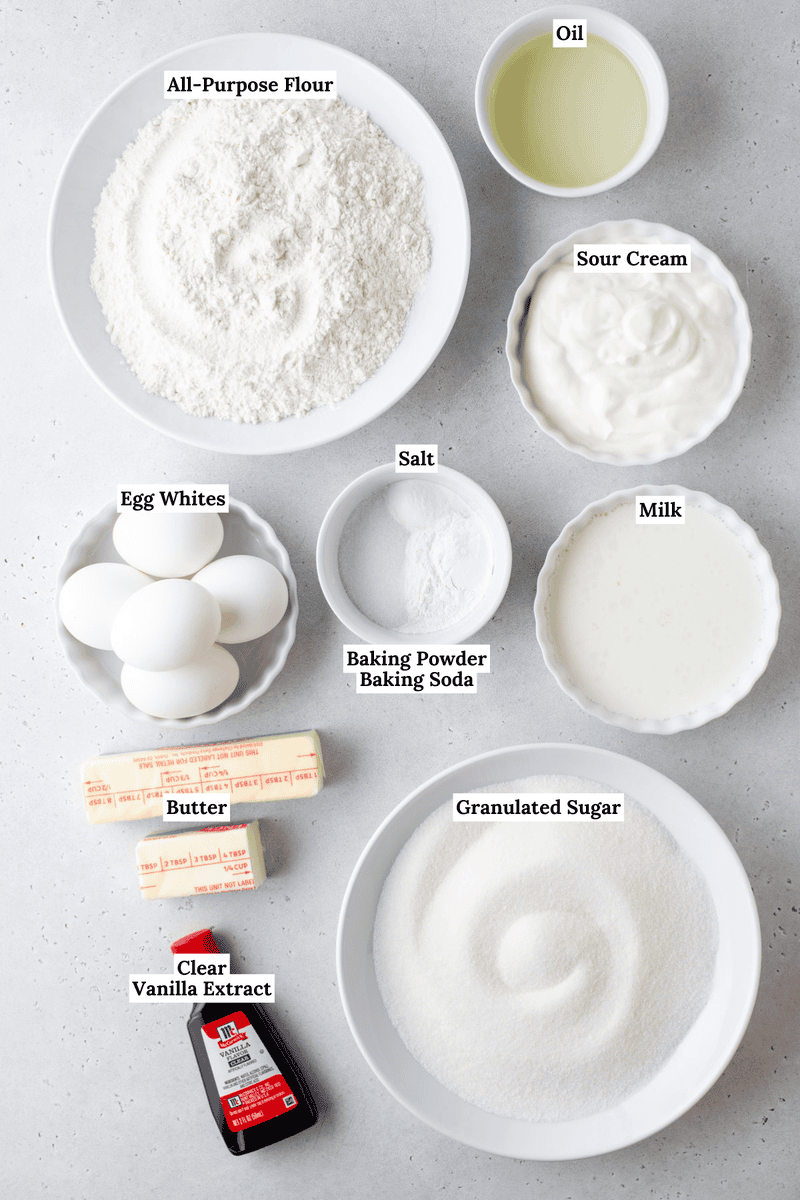
Key Ingredients and Their Purpose
These ingredients play a vital role in making this recipe a success. You can also jump to the full recipe in the recipe card below.
- Egg whites: They are doing double duty here. No yolks means no yellow tint and a lighter, more delicate crumb. Five whites replace four whole eggs and the difference is noticeable in both color and texture.
- Clear vanilla extract: keeps the batter and finished cake looking truly white. Regular vanilla will work flavor-wise but will add a yellow tint you probably don’t want.
- Sour cream: ingredient that makes this cake stay moist for days. It adds a slight tang that balances the sweetness and gives the crumb a tenderness that milk alone can’t deliver.
- Butter plus oil: intentional combination. Butter gives you flavor and structure, oil gives you lasting moisture. Together they produce a cake that is soft, rich, and holds up well after it’s been sitting out.
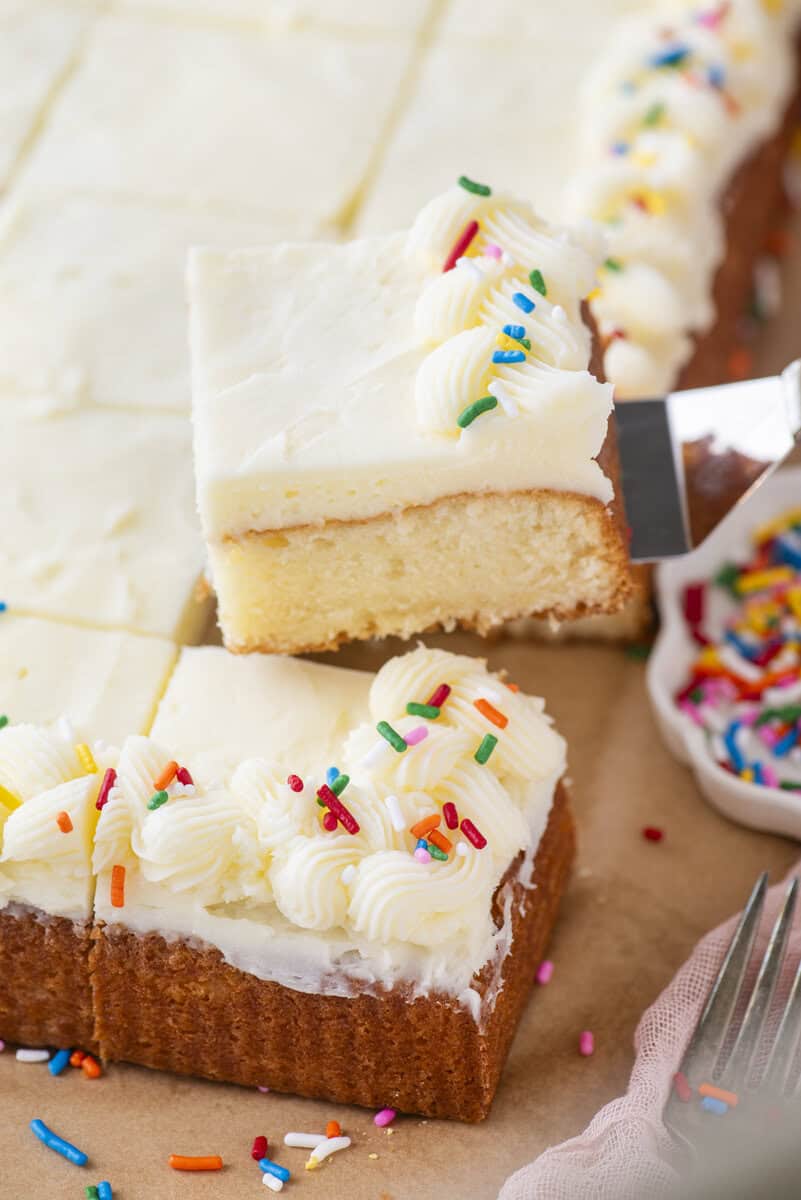
How to Make White Sheet Cake
Follow my simple steps here to make a wow-factor sheet cake, or jump to the recipe card below for the full recipe.
Prep oven and pan: Preheat the oven to 350ºF (180ºC). Spray a 9×13 inch pan with non-stick cooking spray. Set aside.
Combine dry ingredients: In a small mixing bowl combine the flour, baking powder, baking soda, and salt.
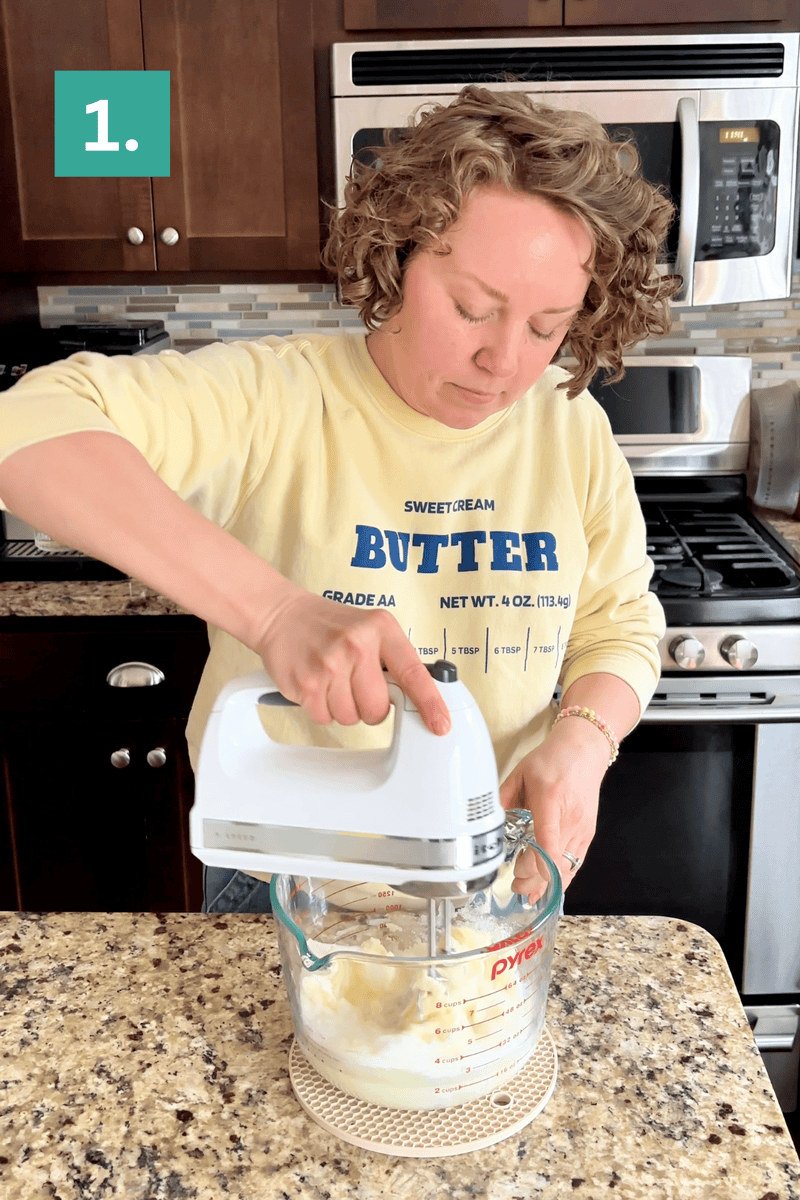
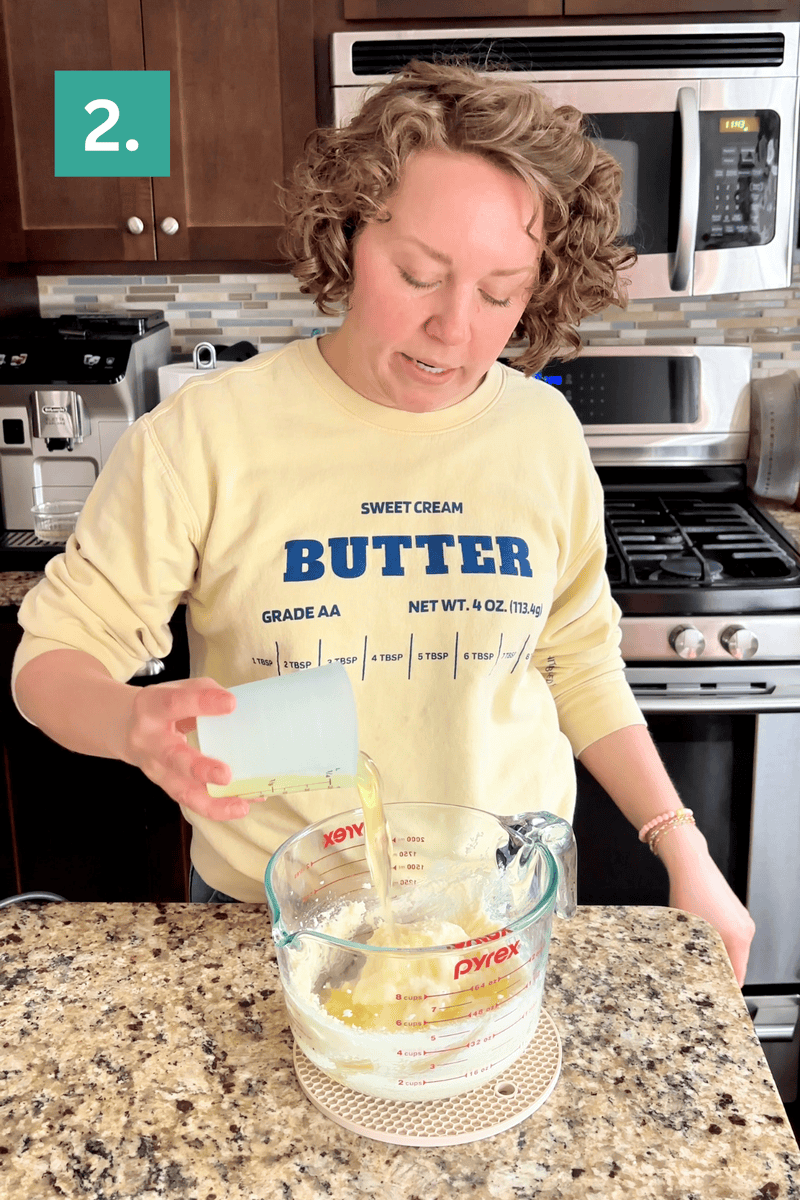
Begin combining wet ingredients: In a large mixing bowl combine the butter, sugar, and vegetable oil, beat using an electric mixer, 1-2 minutes until fluffy.
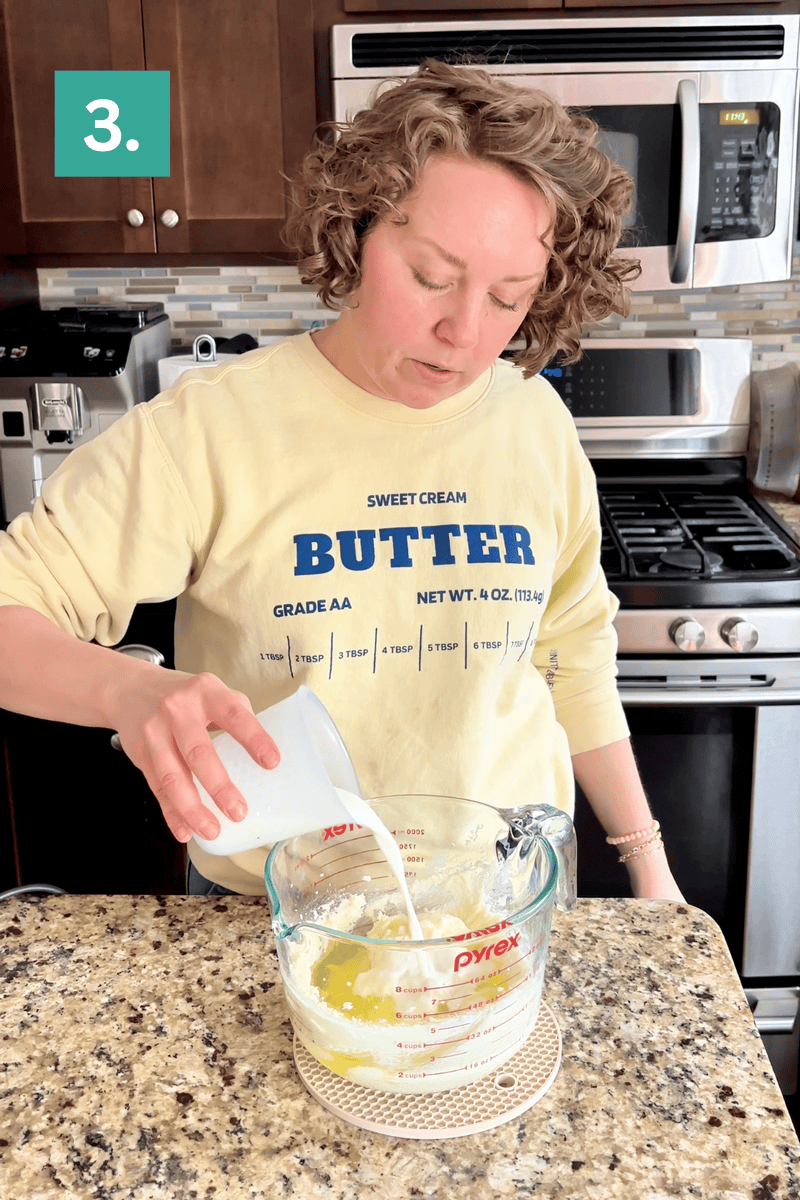
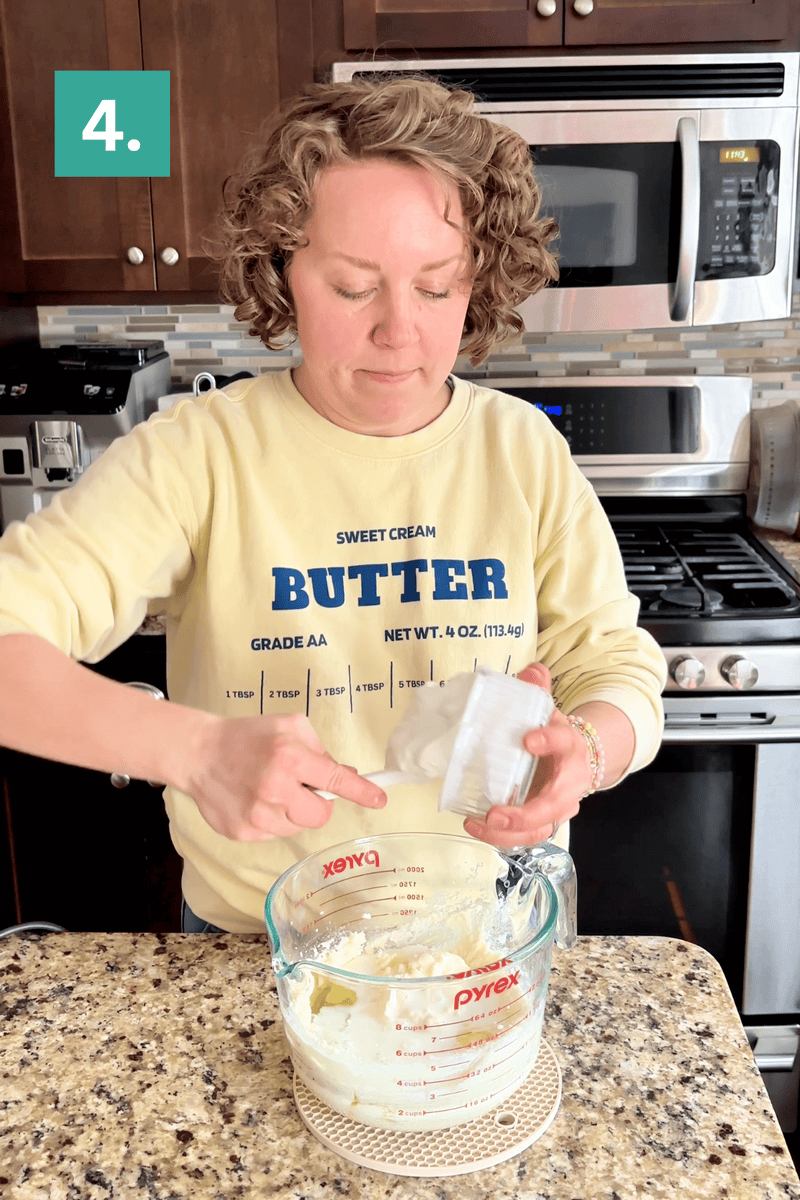
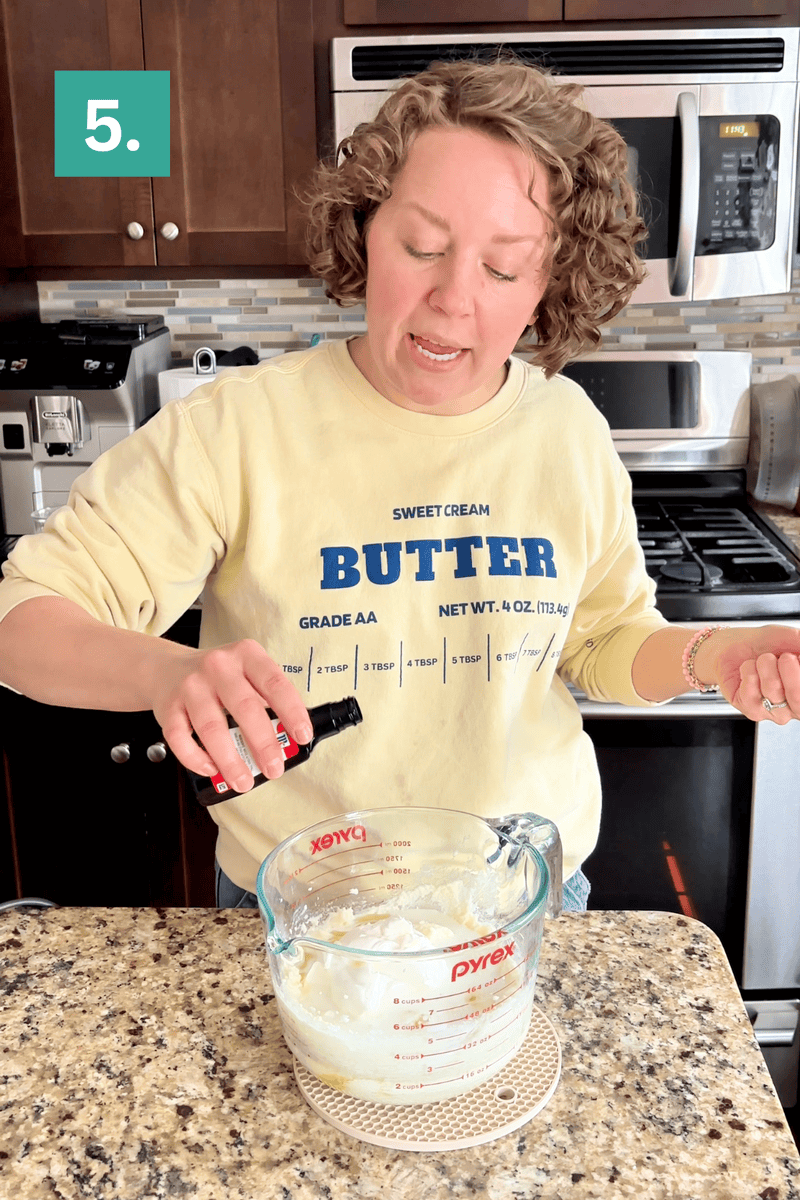
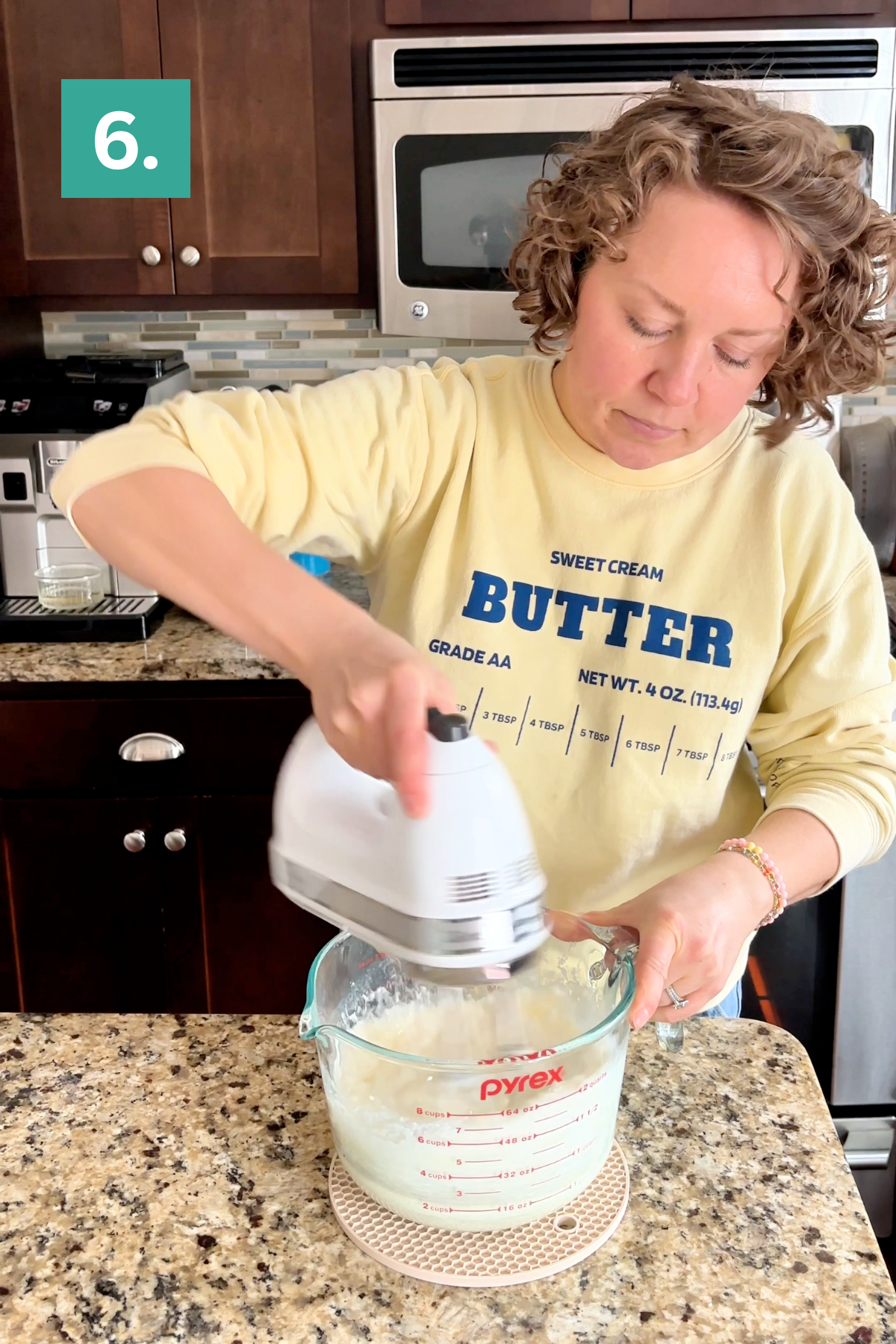
Mix in remaining wet ingredients: Add in the egg whites, sour cream, milk, and vanilla extract. Beat with the electric mixer.
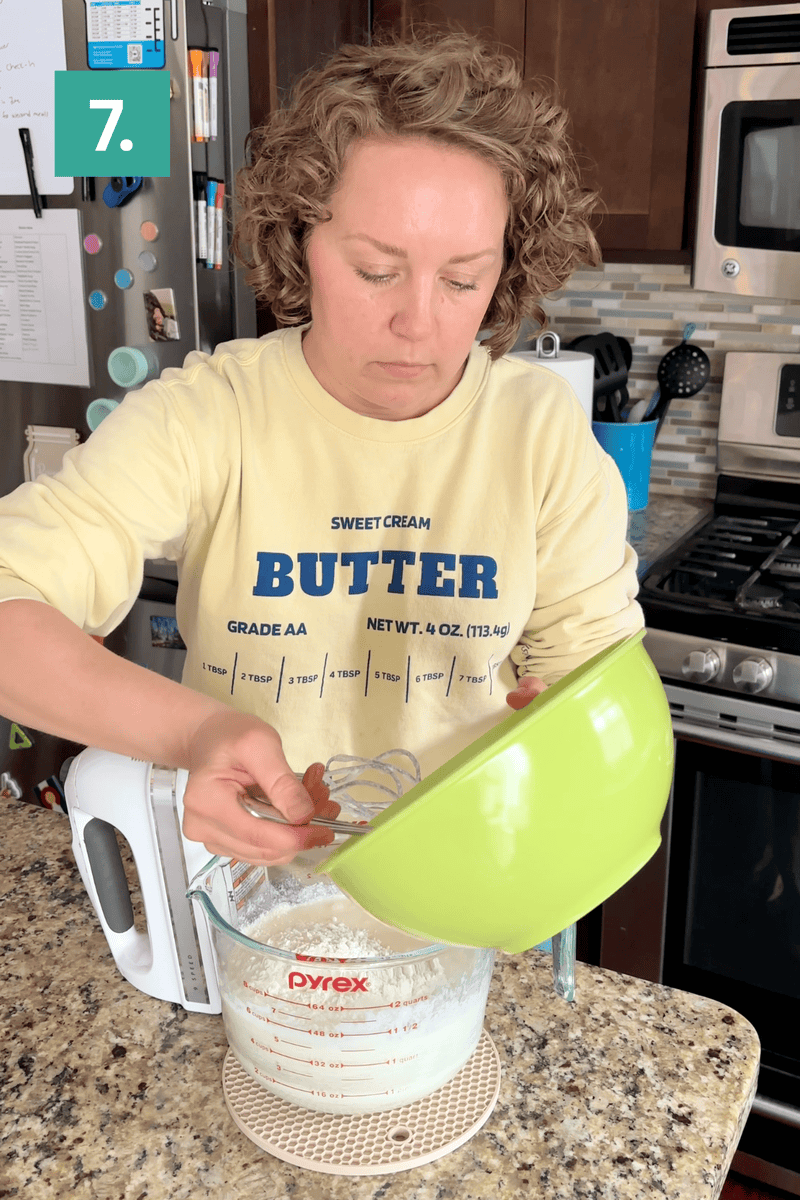
Combine wet and dry ingredients: Gradually add the flour mixture to the wet ingredients, mixing just until the flour is incorporated.
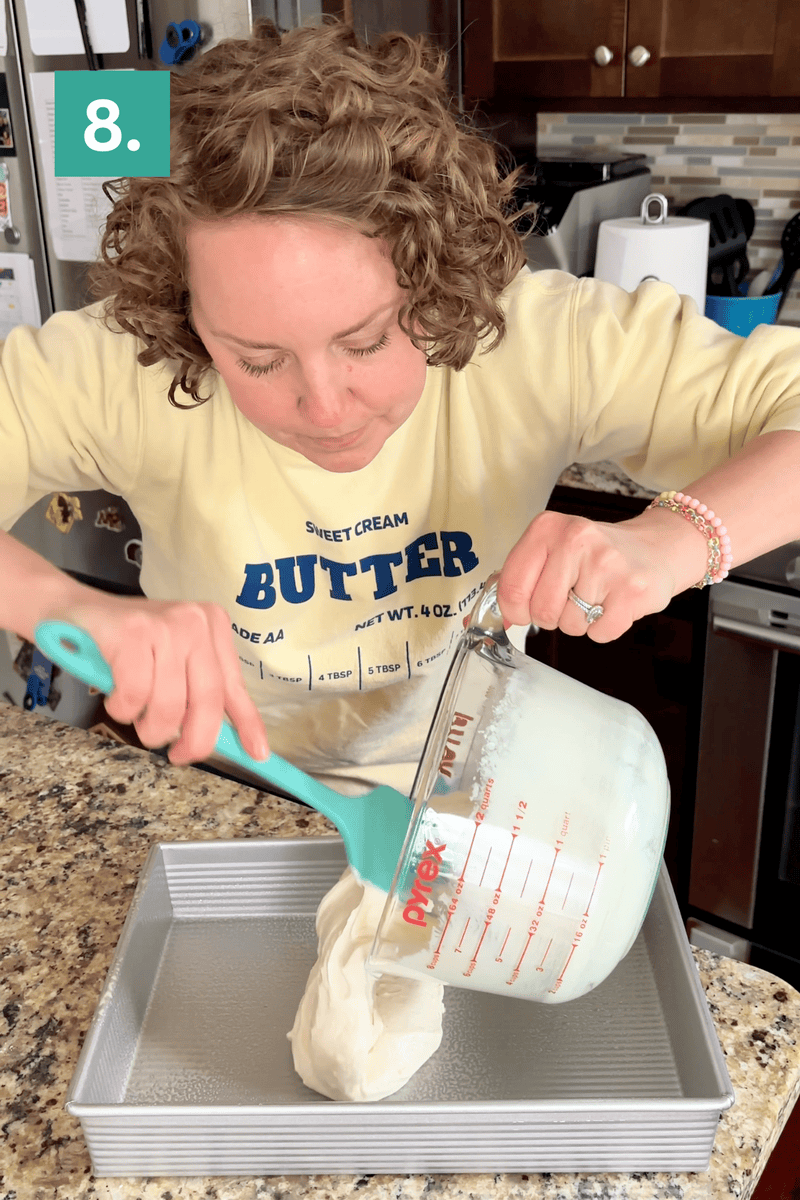
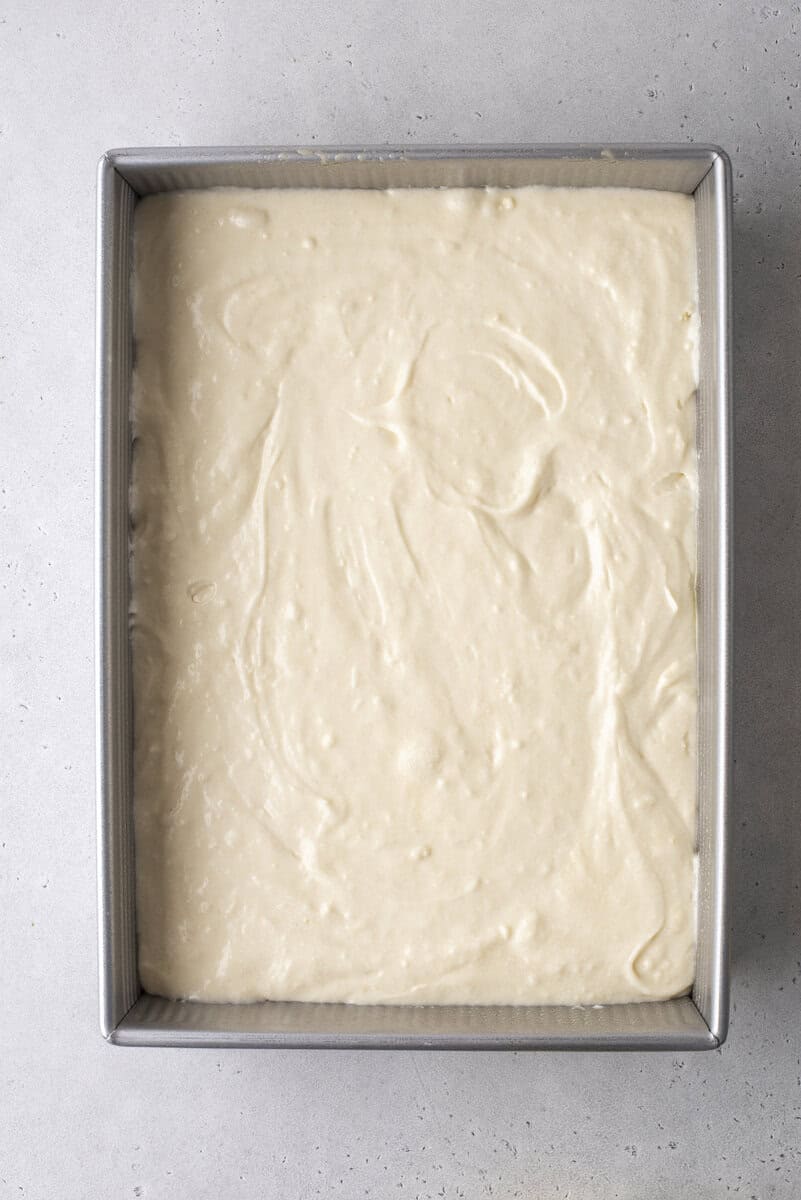
Transfer: Pour the batter into the prepared pan and spread evenly with a spatula.
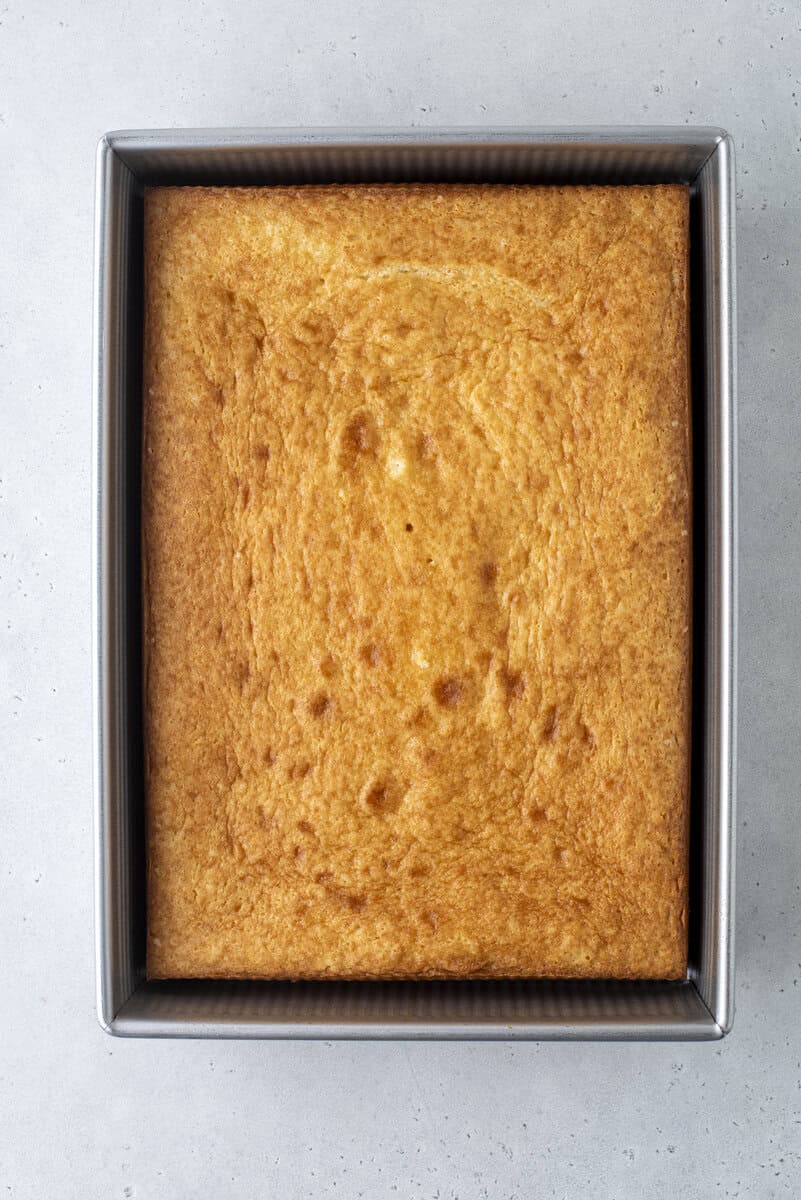
Bake: Bake for 32-39 minutes or until a toothpick inserted into the center comes out clean. Light pans take longer to bake than dark pans.
Cool: Allow the cake to cool completely before frosting.
For the Frosting:
Begin combining ingredients: In a mixing bowl, combine the butter, vanilla extract and salt, beat using an electric mixer until fluffy, 1-2 minutes.
Mix in powdered sugar: Gradually add 4 cups of powdered sugar mixing on low until combined.
Mix in heavy cream: Add in ¼ cup of heavy cream, beating on high until the frosting is whipped and fluffy.
Taste and adjust: Taste to determine if you want more powdered sugar.
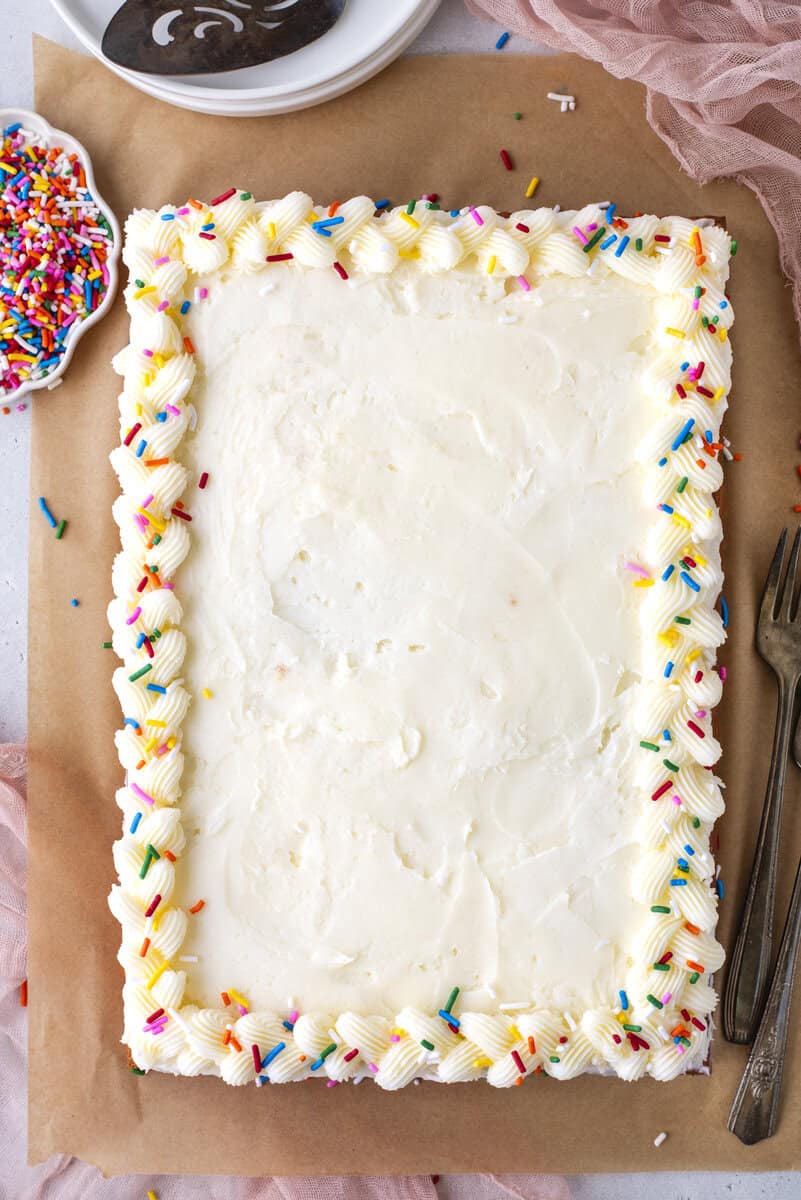
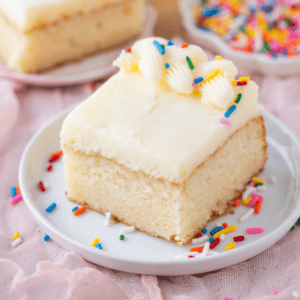
Spread: Spread the frosting over the cake and decorate with sprinkles if desired.
Frosting Options
The vanilla buttercream in this recipe is a classic pairing and it works beautifully here, but this cake is also a great base for switching things up. Because the white cake flavor is neutral and clean, it plays well with just about any frosting you want to put on it. I have a funfetti frosting that makes this feel like a birthday party, a lemon cream cheese frosting that adds a bright tangy contrast, a strawberry cream cheese frosting that is absolutely gorgeous on top of a white cake, and a cool whip frosting if you want something lighter. If you want to go in a different direction entirely, my oreo frosting and chocolate frosting are both incredible options that turn this into something totally different but just as good.
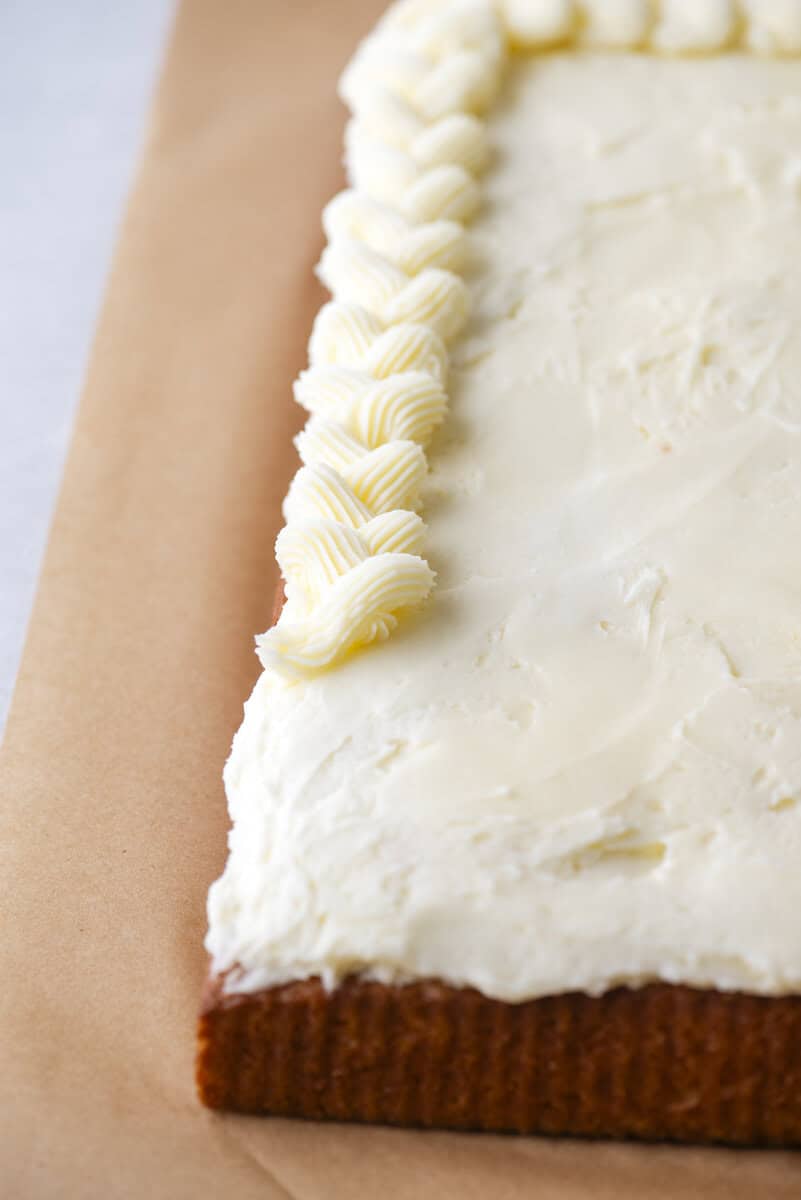
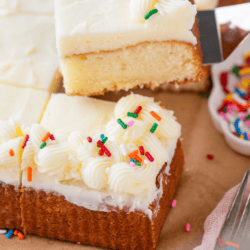
If you want to pipe a border around the edges of the cake like you see in my photos, you will need more frosting than the base recipe makes. I included a larger frosting batch in the notes section of the recipe card specifically for that reason. It is not a small difference in volume so do not try to stretch the base recipe and wonder why you ran out halfway around the pan. Make the bigger batch if you want the border. It is worth it.
How to Store, Freeze, and Make Ahead
- At room temperature: Once frosted, cover the cake with plastic wrap or a lid and store it at room temperature for up to three days. It stays soft and moist because of the sour cream and oil in the batter.
- In the refrigerator: You can store it covered in the fridge for up to five days. Pull it out about 30 minutes before serving so it comes back to room temperature and the crumb softens back up.
- Make ahead: Bake the cake, let it cool completely, then wrap it tightly in plastic wrap and store it at room temperature for up to 24 hours before frosting. This is a great option if you are making it for a party and want to split the work across two days.
- Freezer: Wrap the unfrosted cake tightly in plastic wrap, then again in foil, and freeze for up to two months. Thaw overnight on the counter, then frost as usual.
White Sheet Cake FAQ
Yes! Use a 1:1 gluten-free flour blend, such as King Arthur’s Gluten Free Measure for Measure Flour. I’ve also made this recipe with gluten free flour with awesome results.
You can, but reduce the added salt in both the cake and the frosting by half. Salted butter varies in sodium content by brand, so the base recipe with unsalted butter and measured salt gives you the most consistent result.
Full fat plain Greek yogurt is the best substitute. It has a similar fat content and tang. Avoid low fat versions because they will affect the moisture level of the finished cake.
Yes, the cake will still taste great. The flavor difference is minimal. The only change is that your cake will have a slightly ivory or yellow tinted crumb instead of a true white one. If the color matters to you, clear vanilla is worth picking up.
It does, and more than people expect. Dark pans absorb heat faster and bake the edges and bottom more quickly. Light or shiny pans reflect heat and bake more slowly and evenly. Start checking at 32 minutes regardless of your pan, but expect a dark pan to finish closer to 33 or 34 minutes and a light pan closer to 37 to 39 minutes.
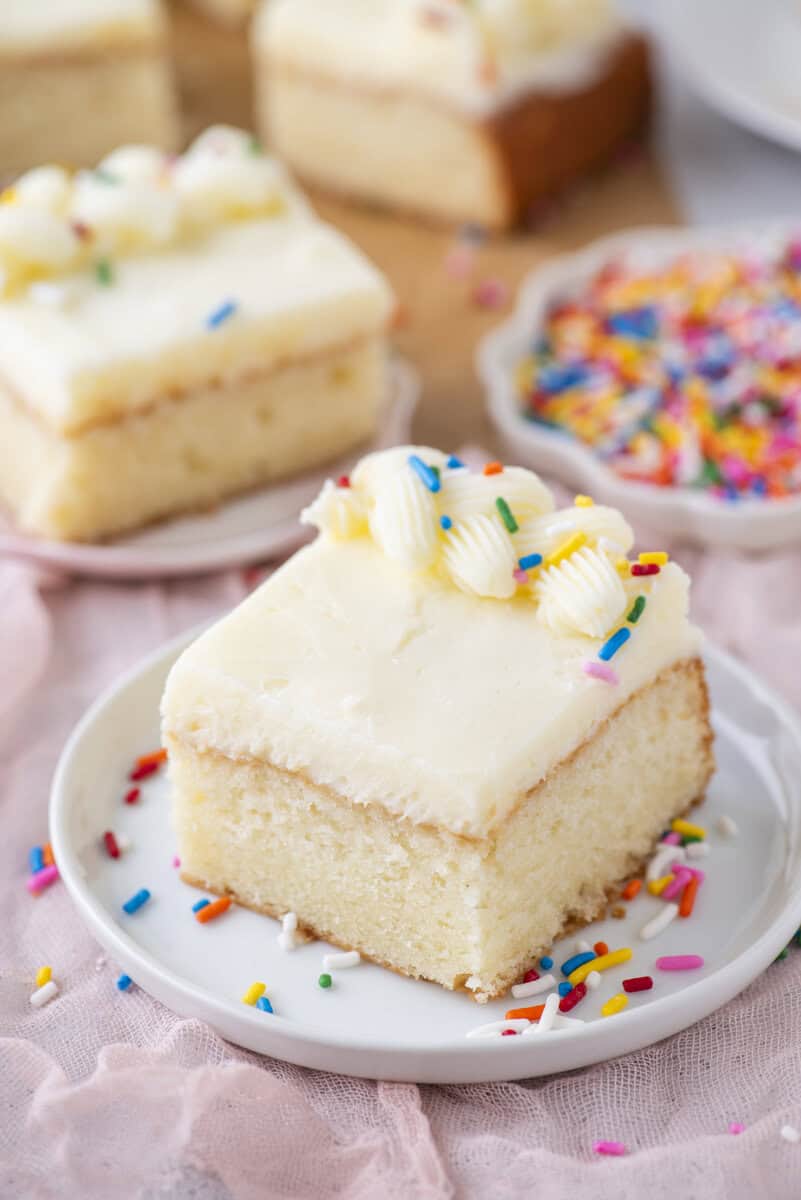
This recipe makes 20 servings in a 9×13 pan which is solid for most gatherings. If you need more, you can bake a second pan rather than trying to scale the recipe into a larger pan, which would require adjusting the bake time significantly.
More Easy Cake Recipes:
Tap stars to rate!
9×13 White Sheet Cake
Video
Ingredients
Cake
- 2 ½ cups (300g) all-purpose flour
- 2 tsp baking powder
- ½ tsp baking soda
- 1 tsp salt
- ¾ cup (170g) unsalted butter, room temperature
- 1 ¾ cups (346g) granulated sugar
- ¼ cup (50g) vegetable oil
- 5 large egg whites, room temperature
- 1 cup (227g) sour cream
- ½ cup (113g) milk, I used whole milk
- 1 Tbsp clear vanilla extract
Frosting *See Notes
- 1 ½ cups (339g) unsalted butter, room temperature
- 1 Tbsp vanilla extract
- ⅛ tsp salt
- 4-6 cups (454–681g) powdered sugar
- ¼ cup heavy cream, more as needed, can substitute milk
Instructions
Cake
- Preheat the oven to 350ºF (180ºC). Spray a 9×13 inch pan with non-stick cooking spray. Set aside.
- In a small mixing bowl combine the flour, baking powder, baking soda, and salt.2 ½ cups (300g) all-purpose flour, 2 tsp baking powder, ½ tsp baking soda, 1 tsp salt
- In a large mixing bowl combine the butter, sugar, and vegetable oil, beat using an electric mixer, 1-2 minutes until fluffy.¾ cup (170g) unsalted butter, 1 ¾ cups (346g) granulated sugar, ¼ cup (50g) vegetable oil
- Add in the egg whites, sour cream, milk, and vanilla extract. Beat with the electric mixer.5 large egg whites, 1 cup (227g) sour cream, ½ cup (113g) milk, 1 Tbsp clear vanilla extract
- Gradually add the flour mixture to the wet ingredients, mixing just until the flour is incorporated.
- Pour the batter into the prepared pan and spread evenly with a spatula.
- Bake for 32-39 minutes or until a toothpick inserted into the center comes out clean. Light pans take longer to bake than dark pans.
- Allow the cake to cool completely before frosting.
Frosting
- In a mixing bowl, combine the butter, vanilla extract and salt, beat using an electric mixer until fluffy, 1-2 minutes.1 ½ cups (339g) unsalted butter, 1 Tbsp vanilla extract, ⅛ tsp salt
- Gradually add 4 cups of powdered sugar mixing on low until combined.4-6 cups (454–681g) powdered sugar
- Add in ¼ cup of heavy cream, beating on high until the frosting is whipped and fluffy.¼ cup heavy cream
- Taste to determine if you want more powdered sugar.
- Spread the frosting over the cake and decorate with sprinkles if desired.
Last Step: I’d love to hear what you think. Leave a rating and comment here.
Notes
2 Tbsp vanilla extract
⅛ tsp salt
6-10 cups (681-1135g) powdered sugar
4-7 Tbsp heavy cream
- Gluten-Free: Use a 1:1 gluten-free baking flour blend in place of all-purpose flour. I used King Arthur’s Measure for Measure Gluten Free Flour with great results.
- To Store: Keep the frosted cake covered tightly with plastic wrap or a lid at room temperature for up to three days. The sour cream and oil in the batter keep it soft and moist the whole time.
- To Make Ahead: Bake the cake and let it cool completely, then wrap tightly in plastic wrap and store at room temperature for up to 24 hours before frosting. The frosting can be made ahead and refrigerated for up to three days. Bring to room temperature and beat briefly before spreading.
- To Freeze: Wrap the unfrosted cake tightly in plastic wrap, then again in foil, and freeze for up to two months. Thaw overnight on the counter and frost as usual.







You recommend non-stick cooking spray. Can you use butter instead?
Yes, you can grease the pan with butter.
Can I add cocoa powder to make it chocolate cake
Hi Emma! No. But I’m about to release my 9×13 chocolate cake recipe!
White cake is my favorite cake. Since there is only two of us can this be halved and baked in an eight or nine inch pan?
Hi Brenda! Yes, I think you could halve it and bake in a 9×9. I’m not sure what the bake time would be.