
This post may contain affiliate links. Please read our disclosure policy.
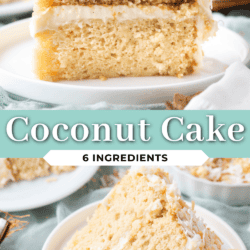
Most coconut cake recipes rely on shredded coconut alone for flavor, which barely does anything once it bakes into the crumb. I use coconut milk and coconut extract together, tested through three rounds, so every bite tastes like coconut. The crumb stays fluffy, the cream cheese frosting balances the sweetness, and the outside gets pressed with toasted coconut for crunch and color. Once you try it, you will stop reaching for any coconut cake recipe.
The Coconut Cake That Finally Tastes Like Real Coconut
Most coconut cakes taste like a vanilla cake wearing a coconut costume. Mine actually tastes like coconut, in every layer, not just sprinkled on top. I tested this three times to get there, and once you try it, you will understand why you will stop reaching for any coconut cake recipe.
My first test swapped the milk in my go to vanilla cake for coconut milk. It tasted like a nice vanilla cake with a whisper of coconut, but not what anyone searching for coconut cake actually wants. Round two I added coconut extract, which nailed the flavor, but the extra fat from the coconut milk made the cake oily, so round three I dropped the oil and fixed the texture for good.
That final round is also when I folded in some finely chopped shredded coconut at my audience’s suggestion. The flavor was great, but I could still feel coconut pieces in every bite, which wasn’t my fav, so I left it out of the version below. If you love that bit of chew, add it in, otherwise the extract and coconut milk carry all the flavor on their own.
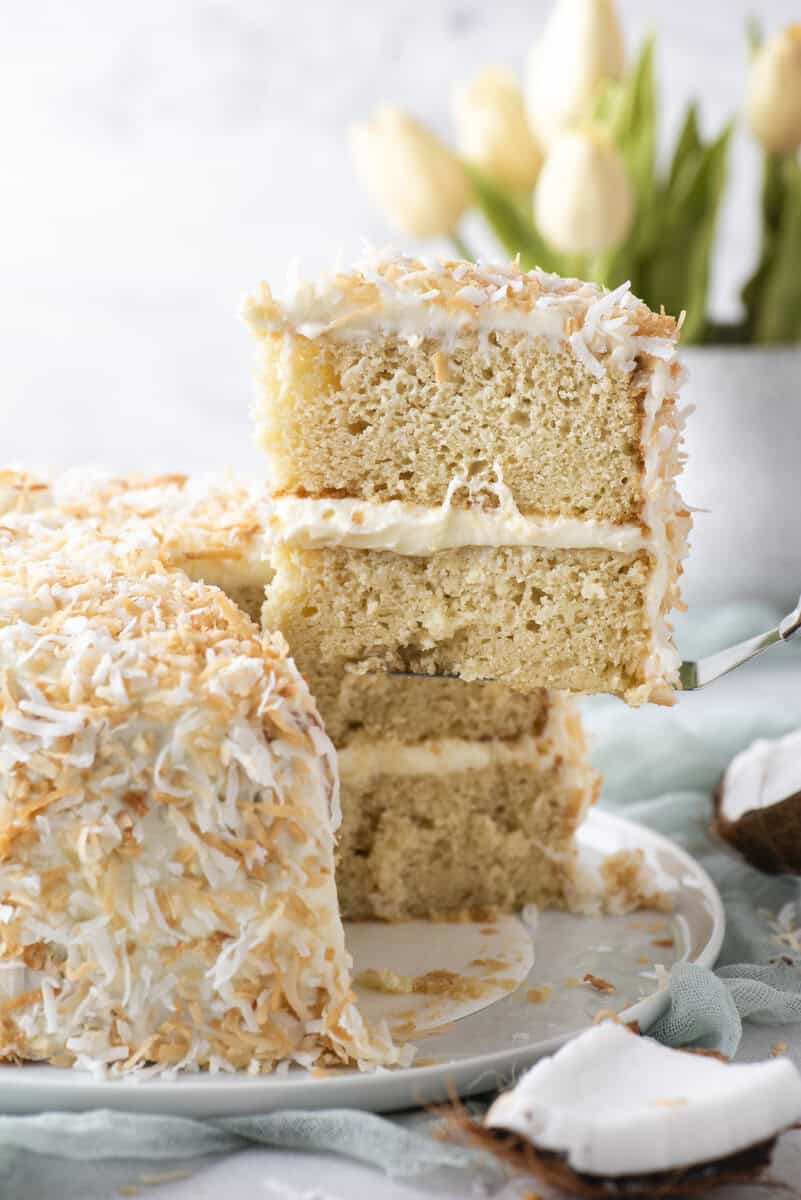
I also tested this cake with egg whites only, since that is the go to trick for a fluffier crumb in a lot of coconut cake recipes. Side by side, I could not tell a difference in fluffiness between the egg white only version and the whole egg version. So I kept whole eggs in this recipe, one less step, one less bowl, and the same result.
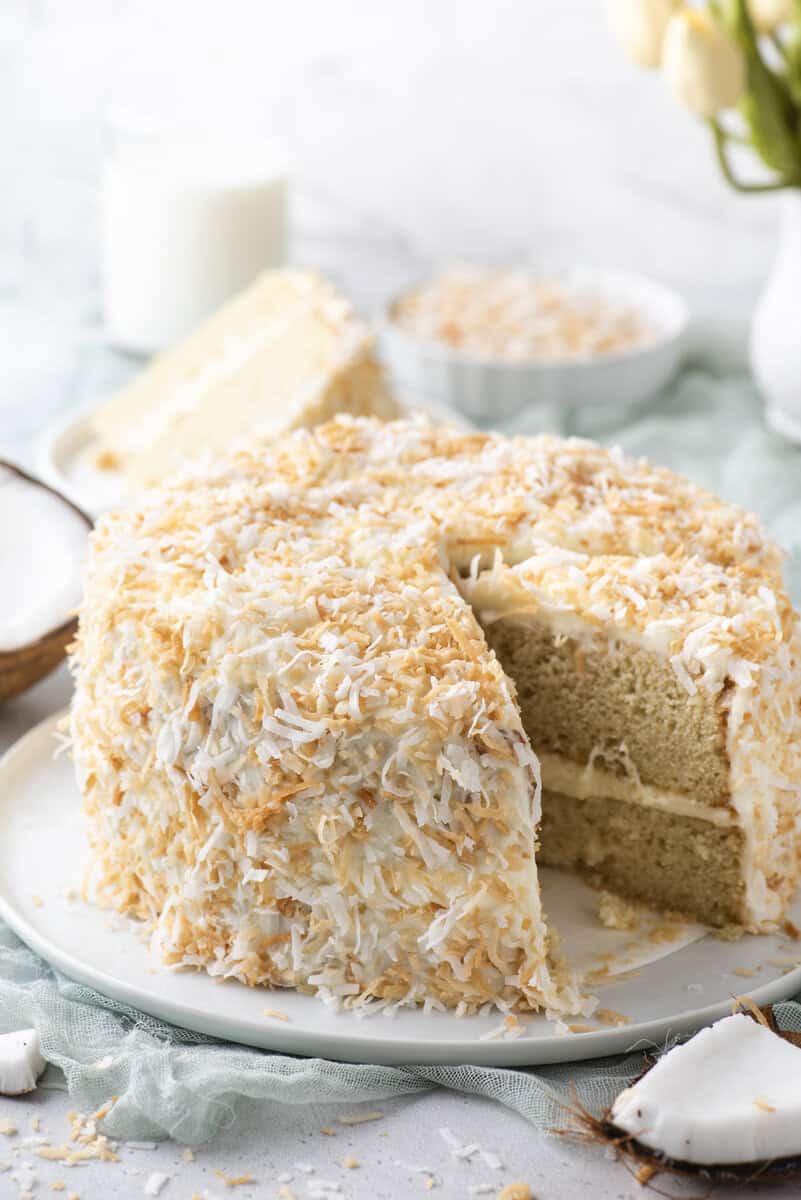
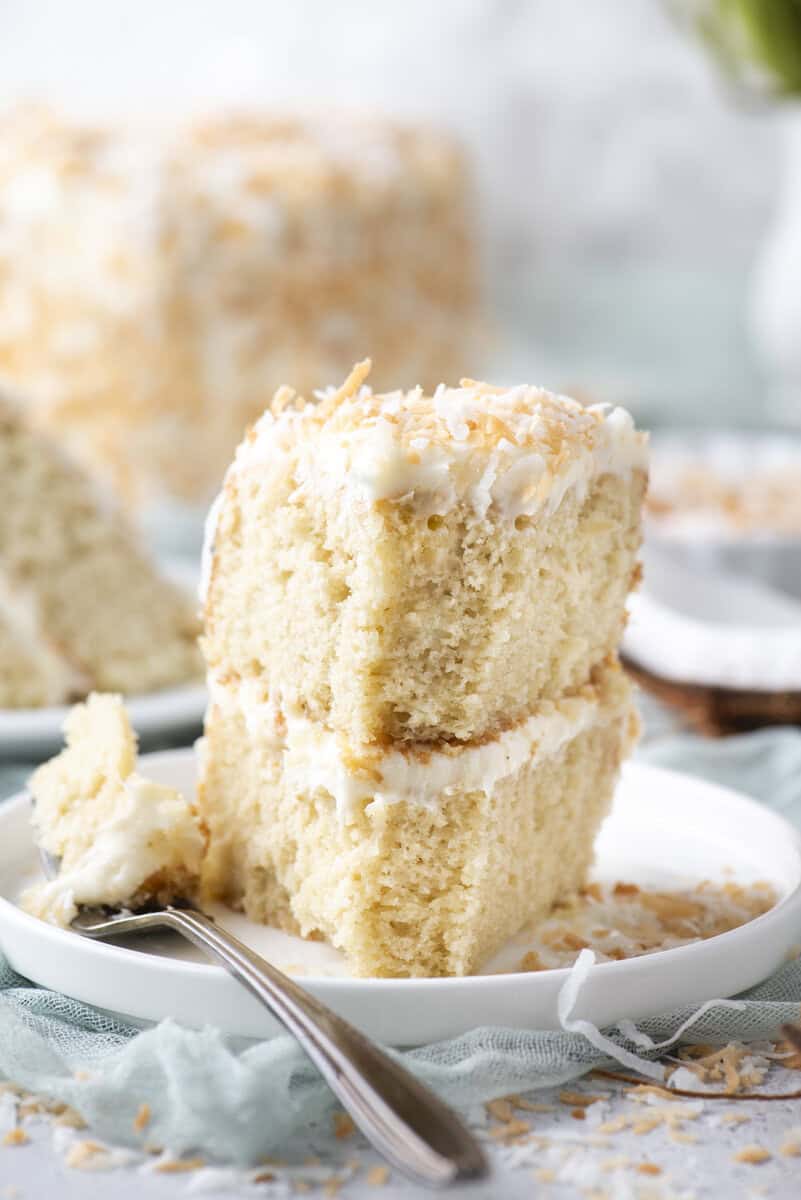
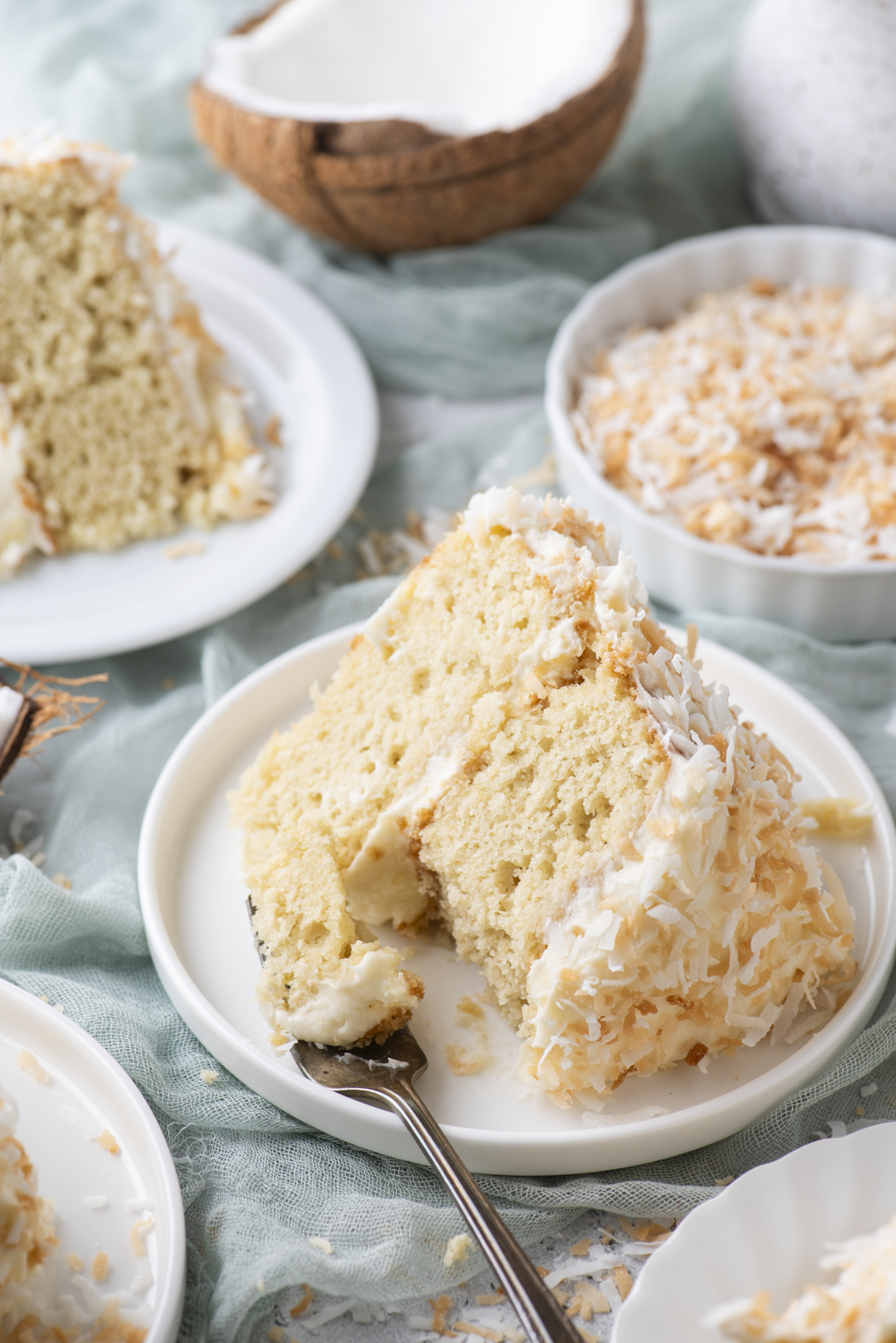
The frosting was an easy call. Coconut cream cheese frosting instead of a straight buttercream, since the cream cheese tang cuts through all that sugar and coconut. Then I pressed a mix of toasted and untoasted shredded coconut into the sides and top for color and crunch.
Why This Coconut Cake Works
- Coconut milk and coconut extract build real coconut flavor into the batter itself, not just the topping
- Sour cream keeps the crumb moist and soft for days, not just the day you bake it
- Coconut cream cheese frosting balances the sweetness instead of piling more sugar on top of sugar
- A mix of toasted and plain shredded coconut on the outside gives you color, crunch, and that classic look
- Works as two thick layers or three thinner layers depending on the pans you have on hand
Ingredient Notes
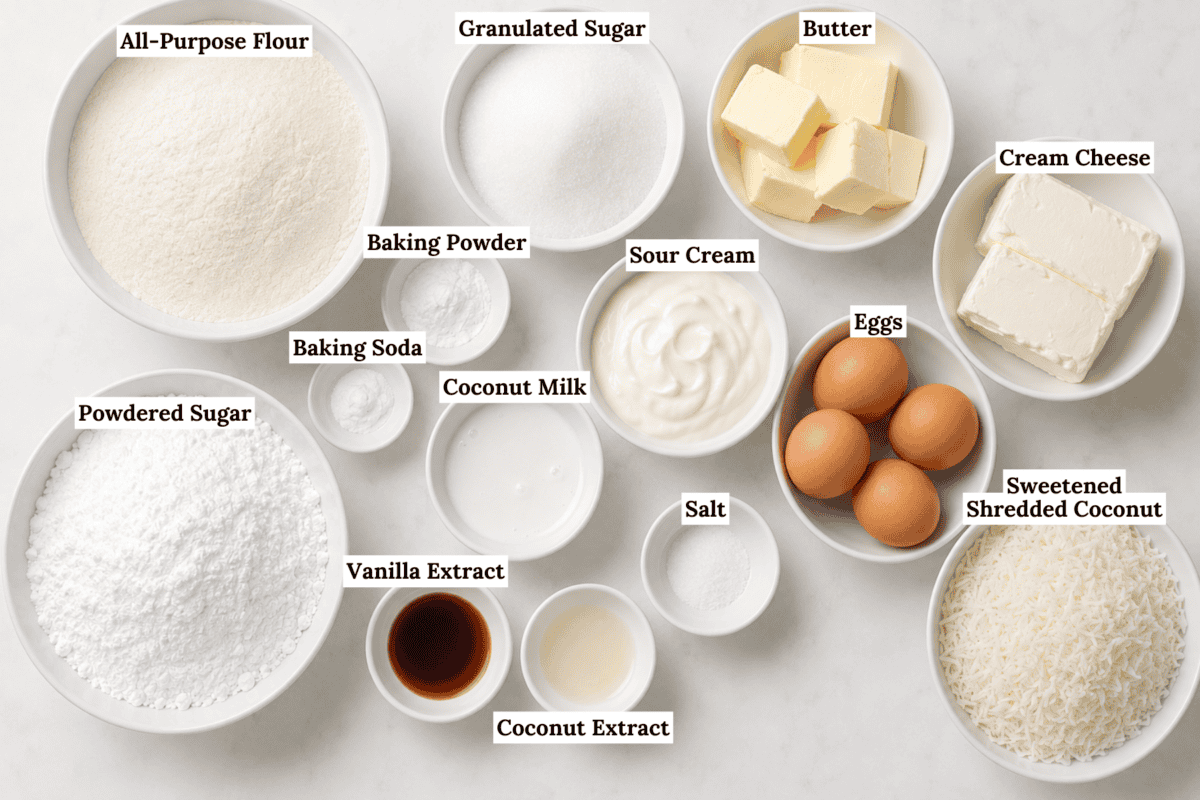
Here are some important tips for the ingredients. You can also jump to the recipe card below for the full recipe.
- Coconut milk: use full-fat canned coconut milk here, not the carton style coconut milk from the refrigerated section. Canned has the fat content to actually contribute flavor and moisture.
- Coconut extract: this is the ingredient that takes the cake from “hint of coconut” to “actually coconut.” Do not skip it even if you already have coconut milk in the batter.
- Sour cream: keeps the crumb tender and moist. If you only have Greek yogurt on hand, it works as a swap, though sour cream gives the softest texture.
- Cream cheese: make sure it is fully room temperature before you start the frosting, or you will end up with lumps no amount of mixing will fully smooth out.
- Sweetened shredded coconut for garnish: you will toast half and leave half raw, then mix them together for the outside of the cake. The mix of textures and colors is what makes the outside look intentional instead of flat.
Be sure to use sweetened shredded coconut, not desiccated or unsweetened. This matters more than people think. Unsweetened and desiccated coconut are drier and finer, and they will pull moisture out of your cake instead of adding to it. Sweetened shredded coconut keeps its moisture, making it easier to press into the sides of the cake for that classic coconut cake look.
How to Make Coconut Cake from Scratch
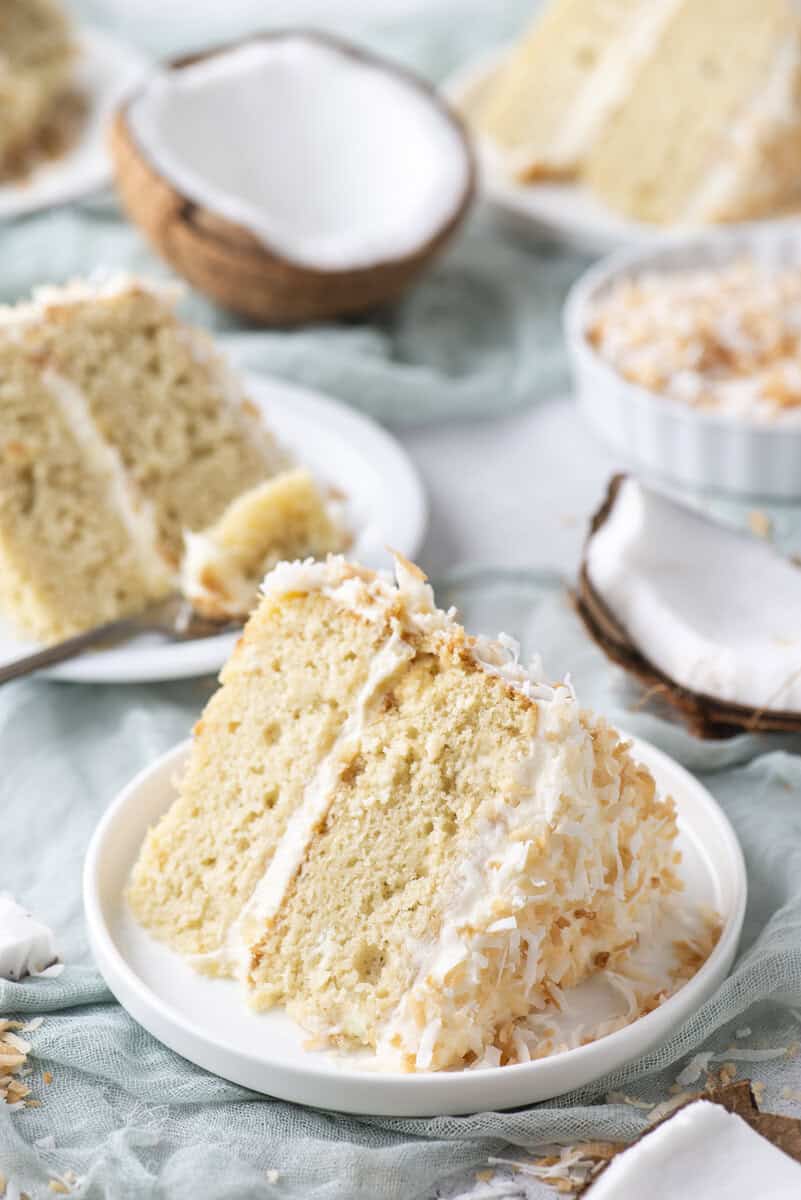
Follow my step-by-step instructions for coconut cake success with no guesswork. You can also jump to the recipe card below for the full recipe.
Cake
Prep oven and pans: Preheat the oven to 350°F. Grease two or three 8 inch round pans with butter, coating the sides and bottom, then line each pan with a parchment paper circle. Set aside.
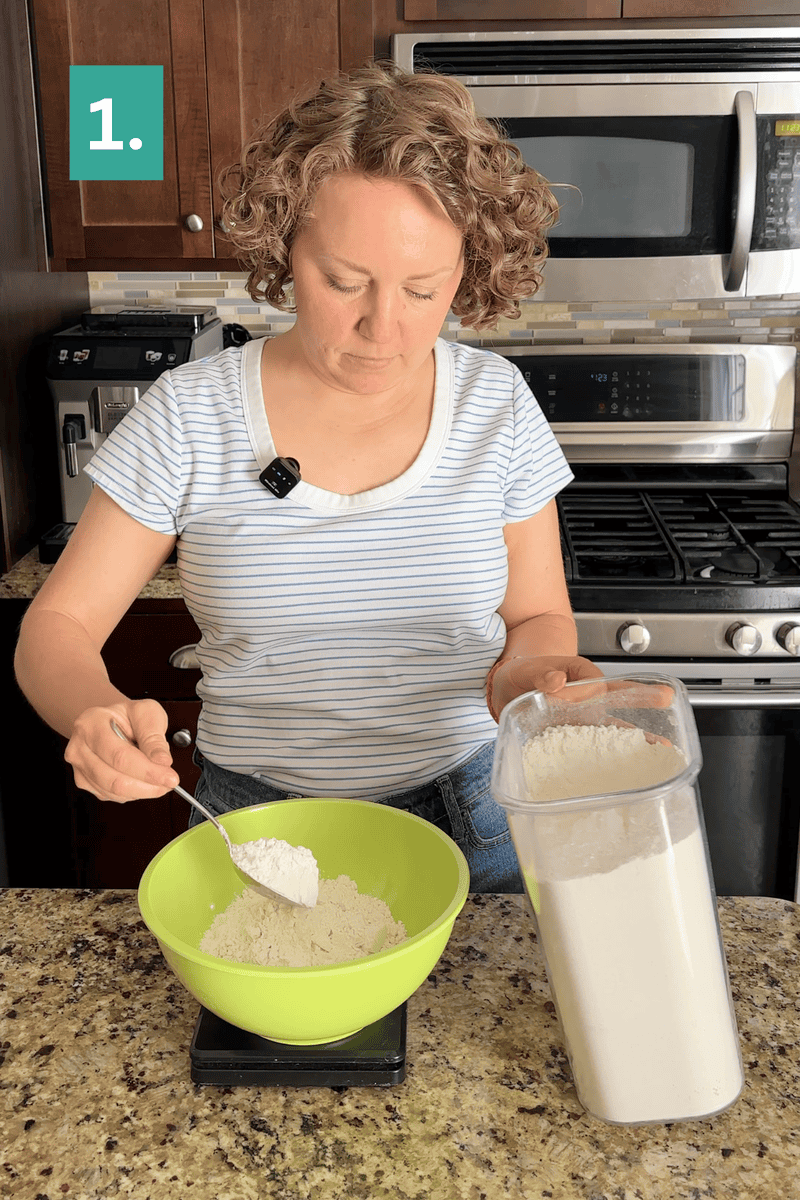
Combine dry ingredients: Whisk together the flour, baking powder, baking soda, and salt in a small bowl.
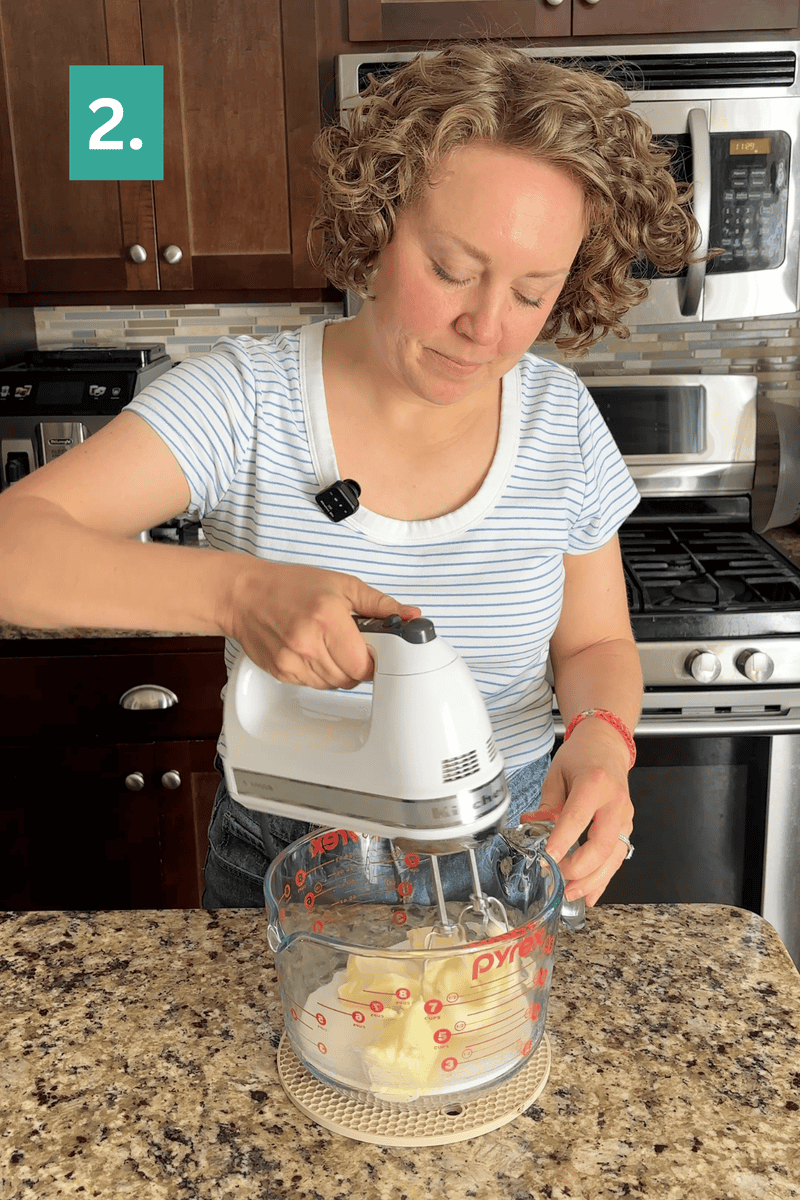
Cream butter and sugar: Beat the butter and sugar with an electric mixer for 1 to 2 minutes until fluffy.
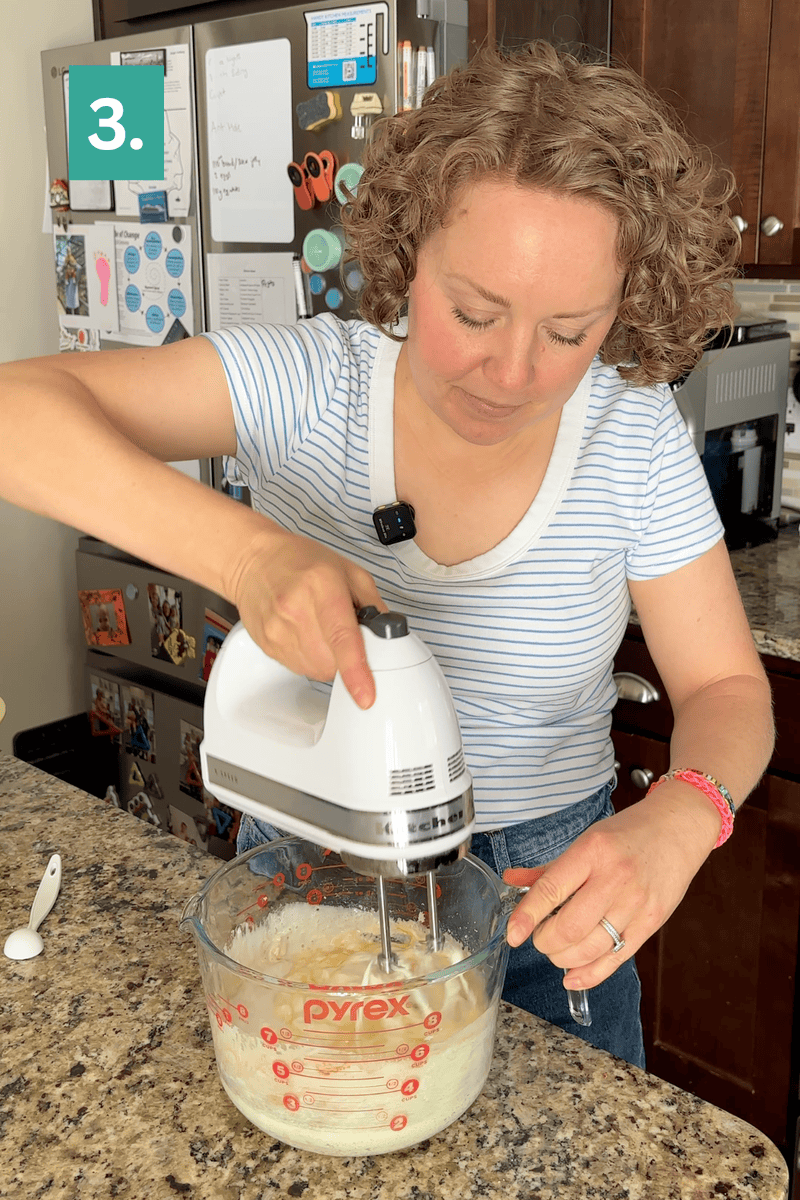
Mix in wet ingredients: Add the eggs, sour cream, coconut milk, vanilla extract, and coconut extract, then beat until combined.
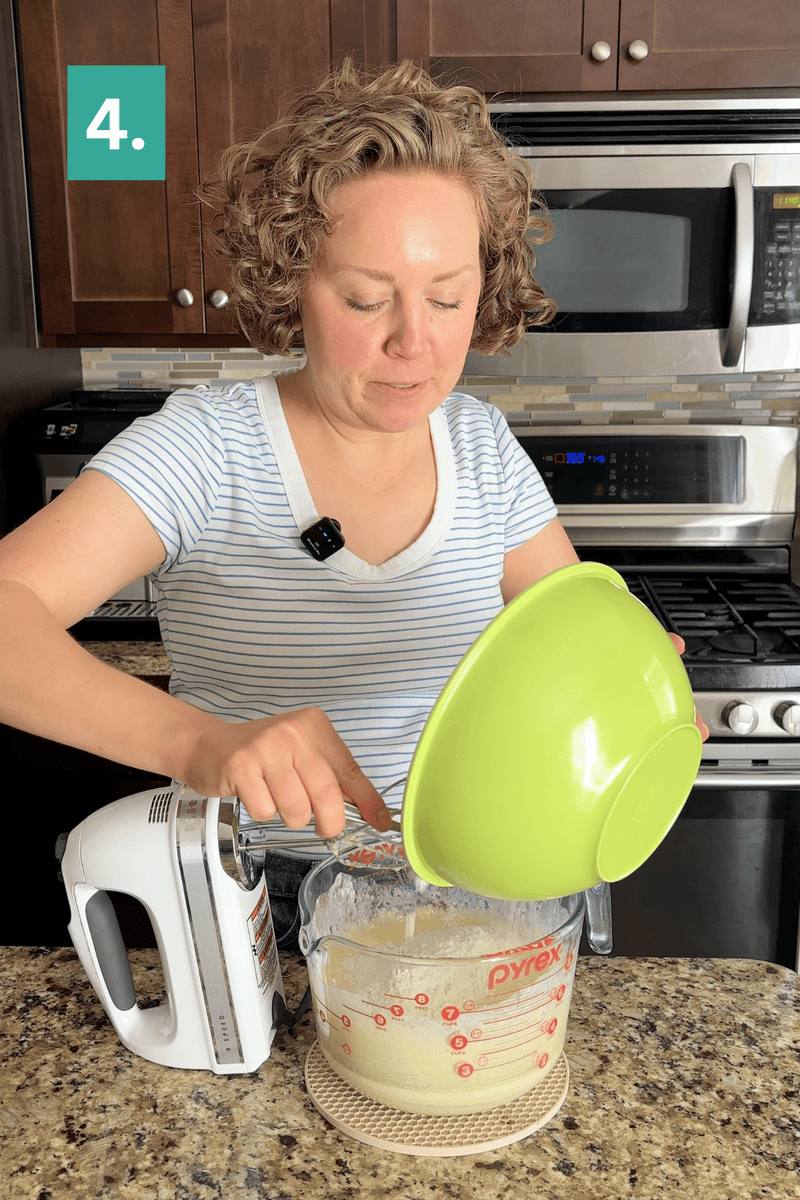
Combine wet and dry ingredients: Gradually add the flour mixture to the wet ingredients, mixing just until incorporated.
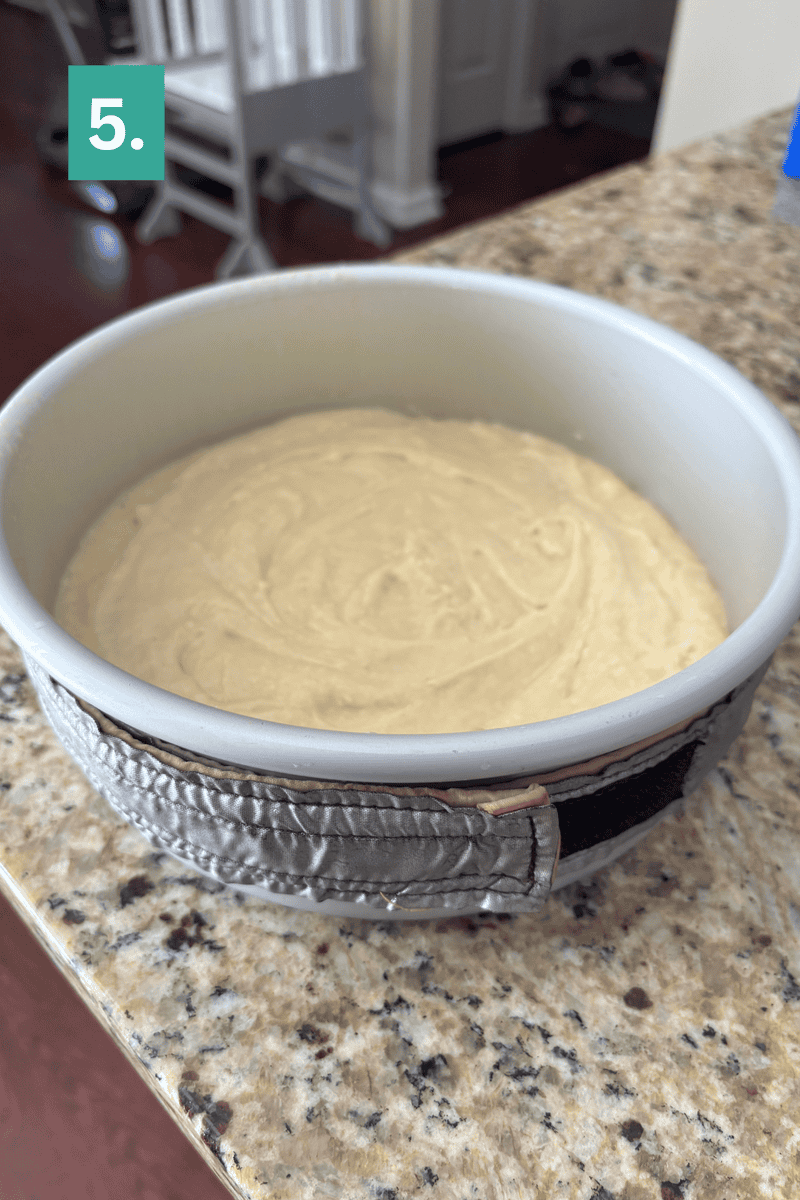
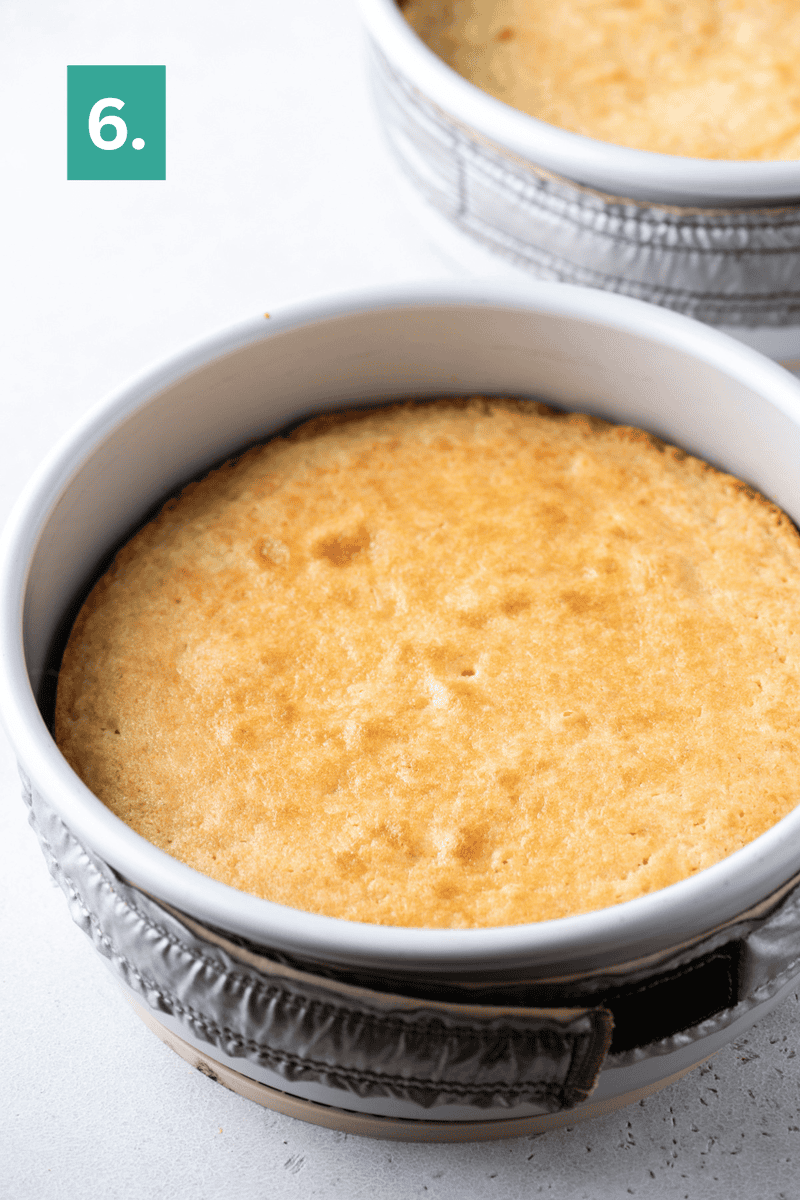
Divide the batter evenly among the pans. For 2 pans, that is about 650 grams or 3 cups per pan. For 3 pans, that is about 433 grams or 2 cups per pan.
Bake: Bake 2 pans for 35 to 45 minutes or 3 pans for 30 to 40 minutes, until a toothpick inserted in the center comes out clean.
Cool: Cool the cakes in the pans for 20 to 30 minutes, then run a small spatula around the edge to loosen them. Remove from the pans and cool completely on a wire rack.
Coconut Cream Cheese Frosting
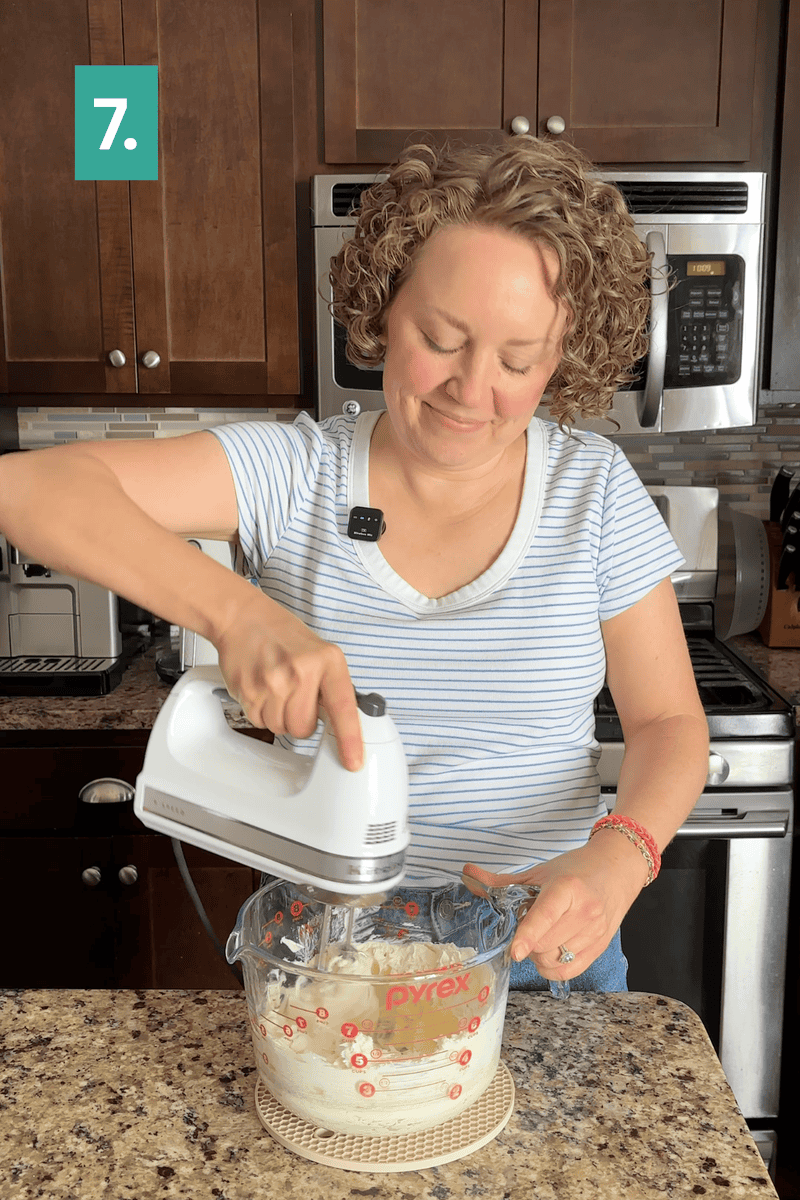
Cream butter and cream cheese: Beat the room temperature butter and cream cheese together on medium for 1 to 2 minutes, until whipped and fluffy.
Mix in remaining ingredients: Add the vanilla extract, coconut extract, salt, and half of the powdered sugar. Beat on low for 1 to 2 minutes, scraping down the sides, until fully incorporated.
Add the remaining powdered sugar and taste. Add more if you want a thicker or sweeter frosting.
Toasted Coconut Garnish
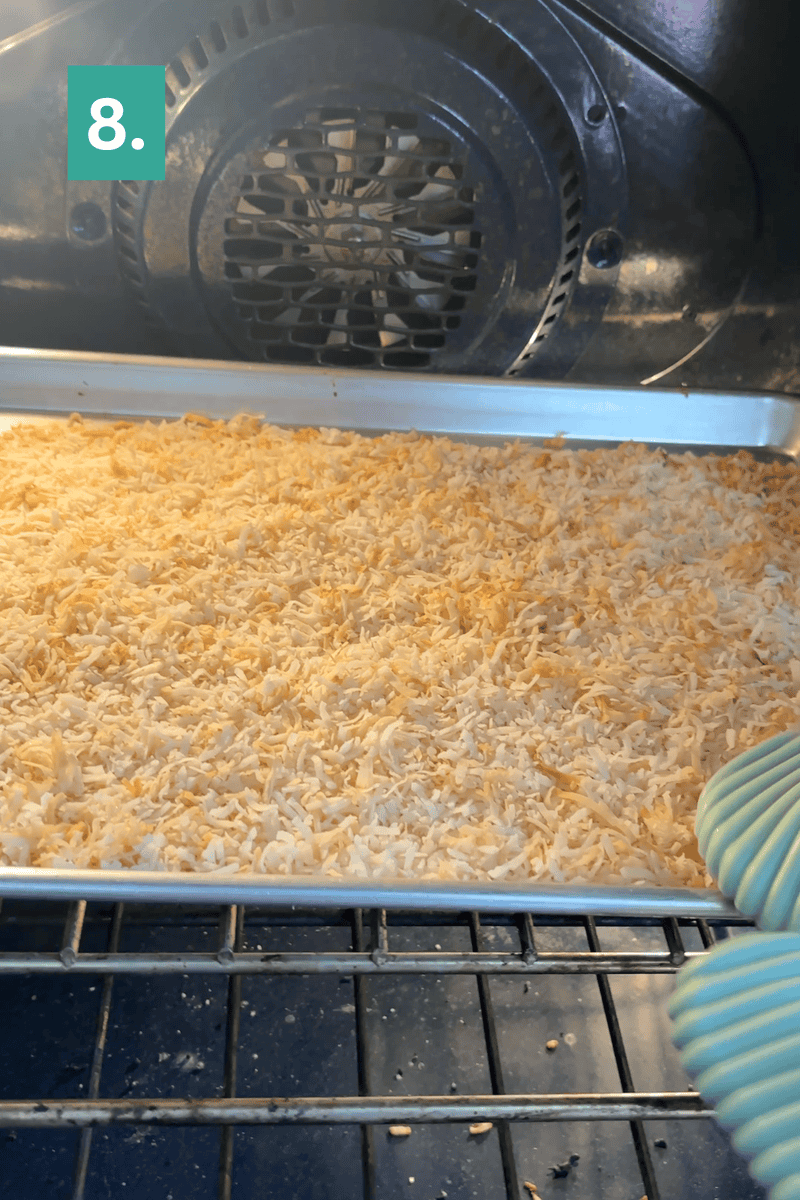
Prep oven and coconut: Preheat your oven to 350°F. Spread 2 cups of shredded coconut in an even layer on a baking sheet, no need to line it.
Begin baking: Bake for 3 minutes, then stir.
Finish baking: Continue baking in 2 to 3 minute intervals, stirring every time, until golden brown, about 6 to 10 minutes total.
Cool: Let it cool completely on the sheet before using.
Assemble
Level: Level the cooled cakes with a cake leveler or serrated knife if needed.
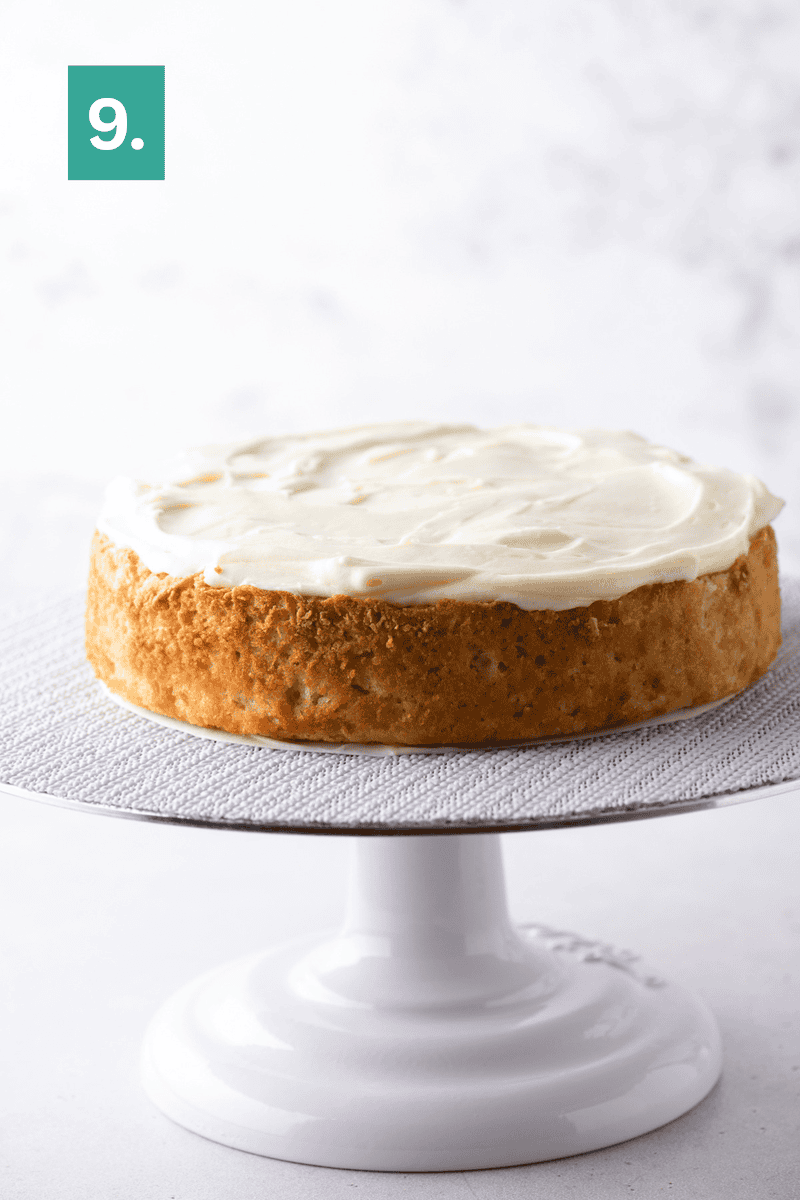
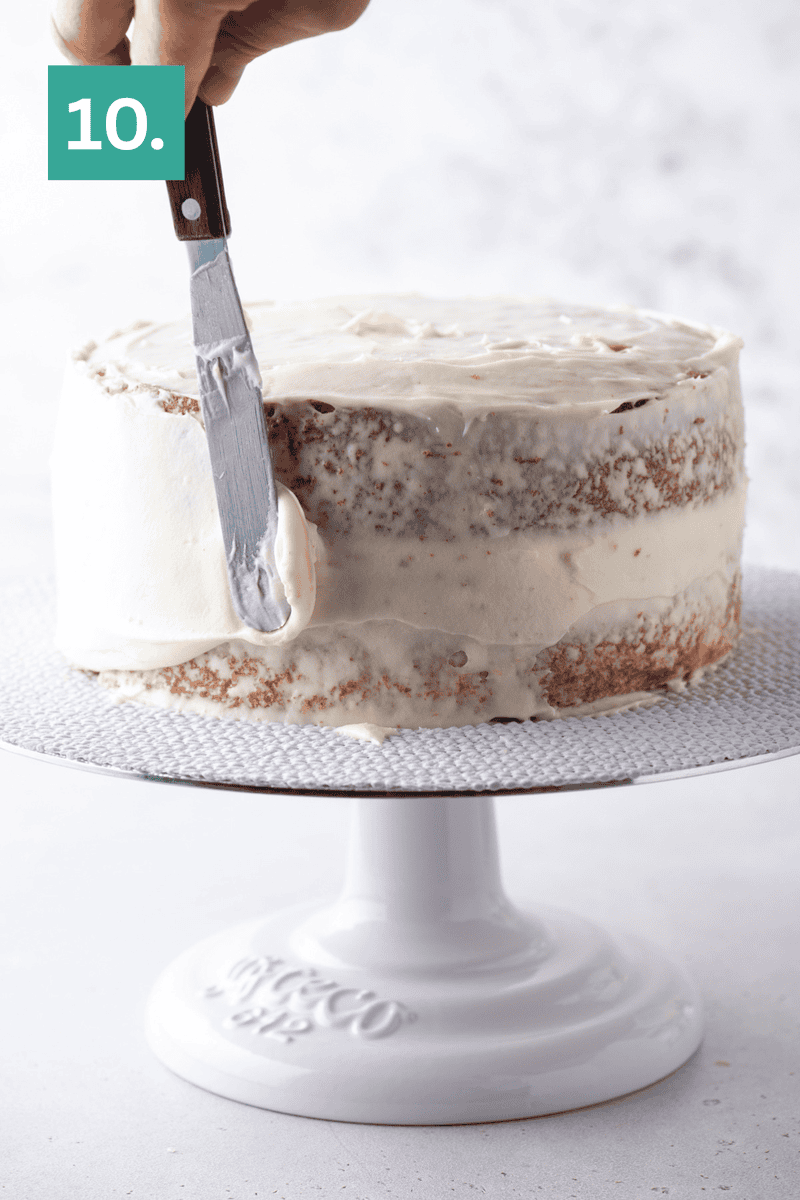
Frosting: Spread a small amount of frosting on your cake plate to act as glue, then place the first layer on top. Spread 1 cup of frosting evenly over it, add the second layer, and repeat. Use the remaining frosting on the top and sides.
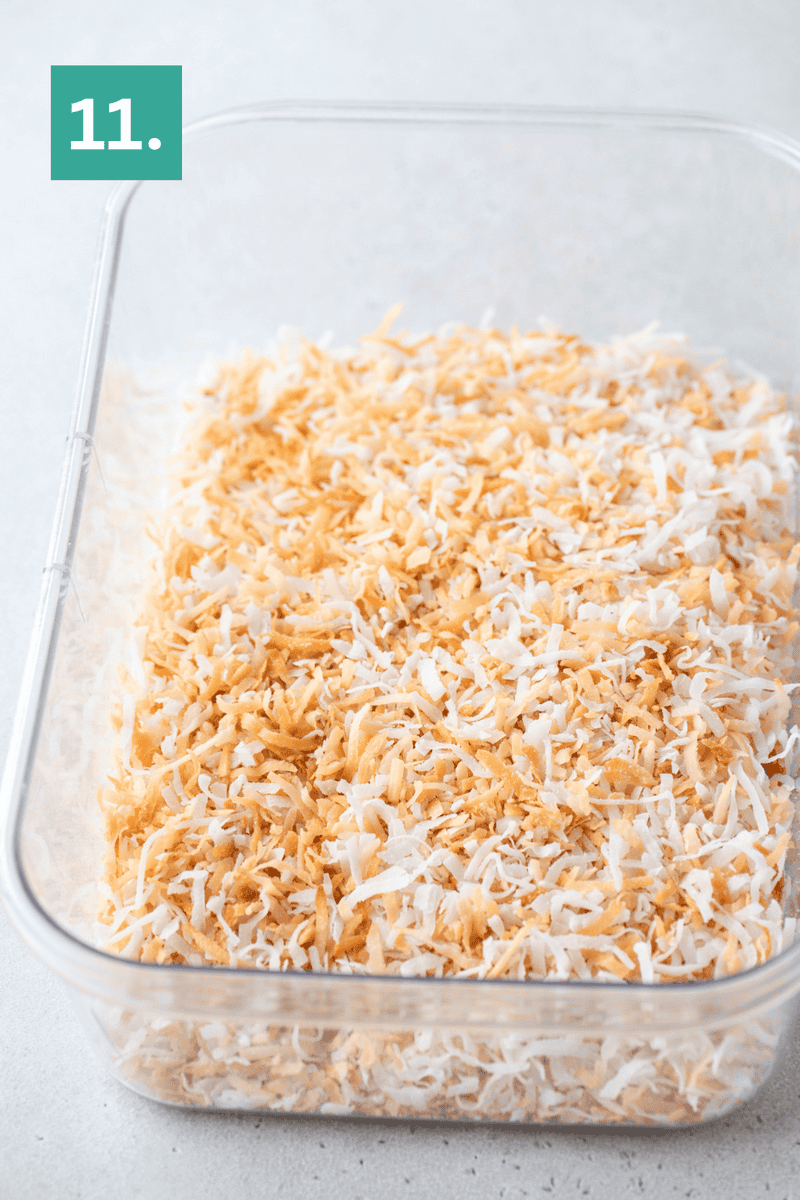
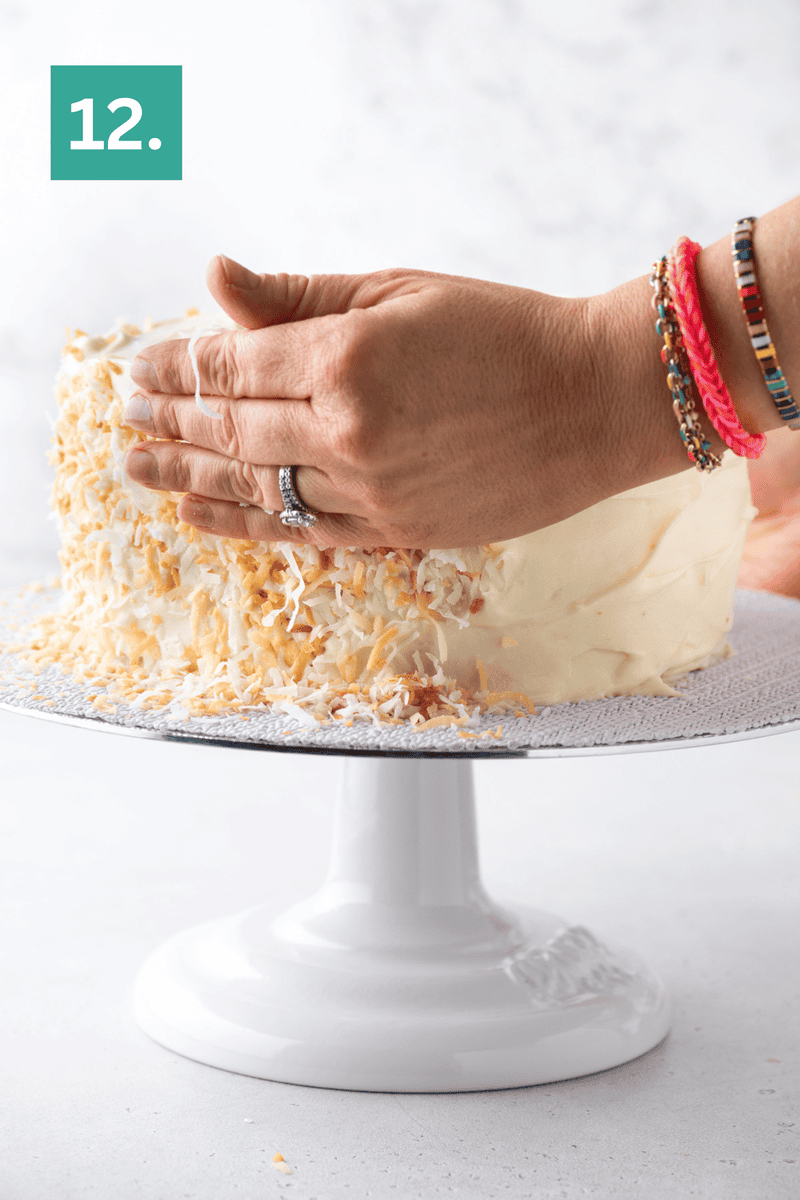
Add coconut topping: Mix the toasted coconut with the remaining shredded coconut and press it into the sides and top of the cake.
Substitutions and Troubleshooting
- Want texture in the cake itself? Fold ½ to 1 cup of finely chopped shredded coconut into the batter before dividing it into the pans.
- Want a lighter frosting? Make my stabilized whipped cream and add in ½ tsp coconut extract.
- Baking in 2 pans vs 3 pans: either works, just watch your bake time. Two pans means thicker layers and a longer bake, three pans means thinner layers and a shorter bake.
- Want a filling between the layers? Spread a thin layer of lemon curd or coconut cream on top of the frosting between layers before adding the next one. It adds another layer of flavor without changing the base recipe.
- Make ahead: the cake layers can be baked, cooled, wrapped tightly, and frozen for up to a month before you frost. Thaw at room temperature before assembling.
You can also chill the baked layers in the fridge for a few hours, or overnight, before frosting. Cold layers are firmer and much easier to handle when you’re stacking and frosting the cake.
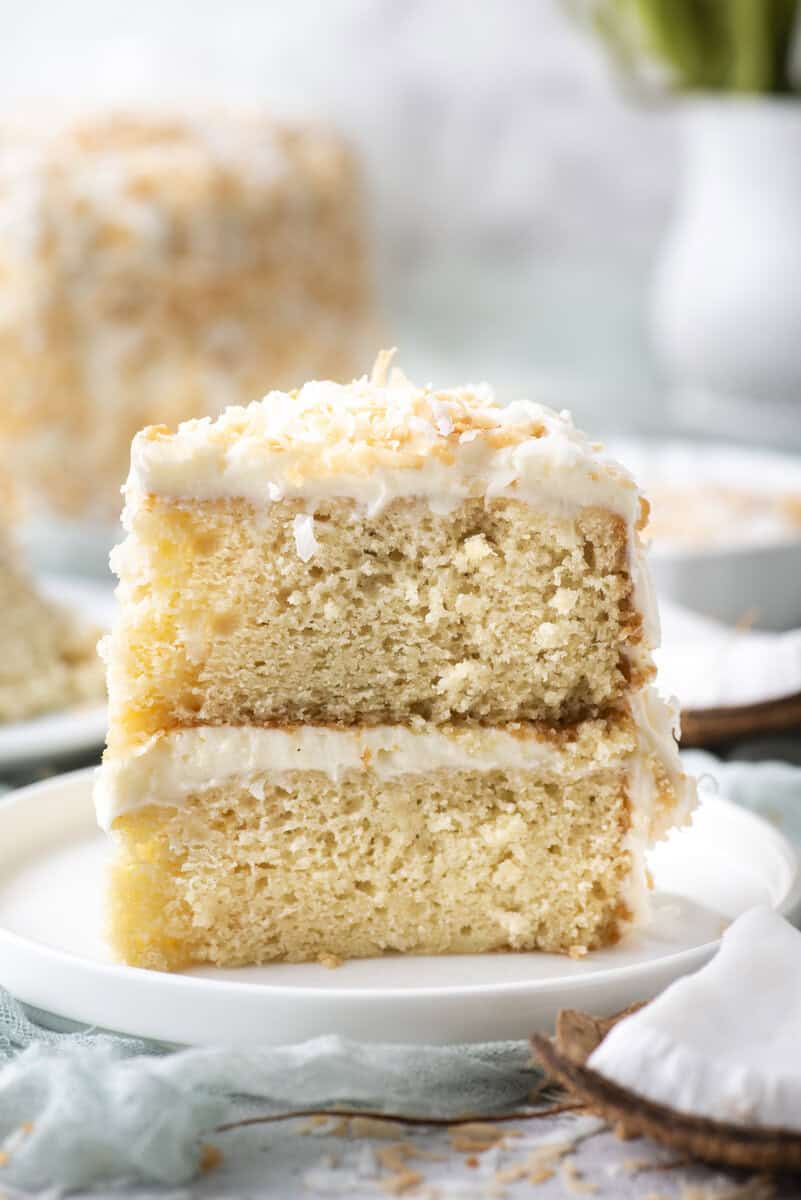
Storing Cake with Cream Cheese Frosting
Store the frosted cake covered in the refrigerator for up to 5 days, thanks to the cream cheese in the frosting. Let slices sit at room temperature for about 20 minutes before serving so the crumb softens back up.
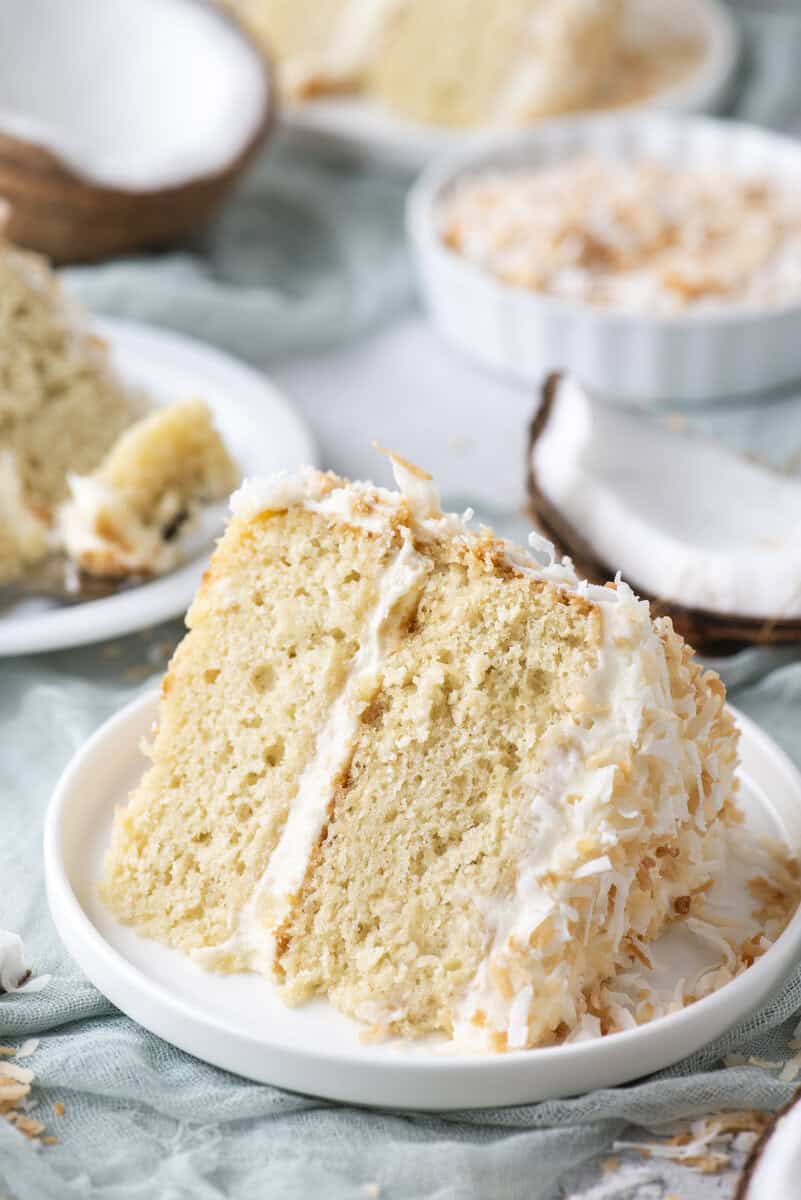
FAQ
The combination of canned coconut milk in the batter and coconut extract is what builds real coconut flavor. Shredded coconut alone does not contribute much flavor once it bakes into a cake.
Coconut cream will work but will make the batter richer and slightly denser. Canned coconut milk gives the best balance of moisture and flavor for this recipe.
No, but the mix of toasted and raw shredded coconut gives the outside of the cake more color and texture. You can use all raw coconut if you prefer a lighter look.
Yes, this batter works well as cupcakes. Fill liners about two thirds full and start checking for doneness around 18 to 20 minutes.
Yes, bake for 32-39 minutes.
More Layer Cake Recipes
Tap stars to rate!
Coconut Cake with Coconut Cream Cheese Frosting
Ingredients
Cake
- 2 ½ cups (300g) all-purpose flour
- 2 tsp baking powder
- ½ tsp baking soda
- 1 tsp salt
- ¾ cup (170g) unsalted butter, room temperature
- 1 ½ cups (297g) granulated sugar
- 4 large eggs, room temperature
- 1 cup (227g) sour cream
- ½ cup (120g) canned coconut milk
- 1 Tbsp vanilla extract
- 1 tsp coconut extract
Coconut Cream Cheese Frosting
- 12 oz (340g) cream cheese, room temperature
- 1 cups (226g) unsalted butter, room temperature
- 1 tsp vanilla extract
- ½ tsp coconut extract, use 1 tsp if you want more intense coconut flavor
- ⅛ tsp salt
- 5-7 cups (576-791g) powdered sugar
Garnish
- 4 cups sweetened coconut flake, divided
Video
Instructions
Cake
- Preheat the oven to 350º F. Grease two or three 8 inch round pans with butter (butter the sides and bottom) and line each pan with a parchment paper circle for easy cake removal. Set aside.
- In a small mixing bowl combine the flour, baking powder, baking soda, and salt.2 ½ cups (300g) all-purpose flour, 2 tsp baking powder, ½ tsp baking soda, 1 tsp salt
- In a large mixing bowl combine the butter and sugar, beat using an electric mixer, 1-2 minutes until fluffy.¾ cup (170g) unsalted butter, 1 ½ cups (297g) granulated sugar
- Add in the eggs, sour cream, coconut milk, vanilla extract, and coconut extract. Beat with the electric mixer.4 large eggs, 1 cup (227g) sour cream, ½ cup (120g) canned coconut milk, 1 Tbsp vanilla extract, 1 tsp coconut extract
- Gradually add the flour mixture to the wet ingredients, mixing just until the flour is incorporated.
- Evenly divide the batter among the pans. If using 2 pans, that’s about 650 grams / 3 cups of batter per pan, if using 3 pans, that’s about 433 grams / 2 cups of batter per pan. If you have bake even cake strips, soak them, then secure them around the outside of the pans.
- Bake 2 pans for 35-45 minutes or 3 pans for 30-40 minutes or until a toothpick inserted in the center comes out clean.
- Allow the cakes to cool for 20-30 minutes in the pans, then use a small spatula to loosen the cake from the edge of the pan. Remove the cake from the pans and allow them to cool completely on a cooling rack.
Coconut Cream Cheese Frosting
- Place room temperature unsalted butter and cream cheese in a mixing bowl. Use an electric mixer on medium and beat together for 1-2 minutes, until whipped and fluffy.12 oz (340g) cream cheese, 1 cups (226g) unsalted butter
- Add in the vanilla extract, coconut extract, salt and half of the powdered sugar, beat again on low for 1-2 minutes, scraping down the sides of the bowl, until everything is incorporated.1 tsp vanilla extract, ½ tsp coconut extract, 5-7 cups (576-791g) powdered sugar, ⅛ tsp salt
- Add the remaining powdered sugar. Taste to determine if you want to add more powdered sugar.
Garnish
- Preheat your oven to 350°F – no need to line your pan.
- Spread 2 cups of shredded coconut in an even layer on the sheet. Don’t pile it up or it toasts unevenly.4 cups sweetened coconut flake
- Bake for 3 minutes, then stir.
- Keep baking in 2 to 3 minute intervals, stirring every time, until it’s golden brown. This usually takes 6-10 minutes total.
- Watch it closely once it starts turning color. Coconut goes from perfectly toasted to burnt fast.
- Let it cool completely on the sheet before using.
Assemble the Cake
- If needed, level the cooled cakes using a cake leveler or serrated knife.
- Spread a small amount of frosting on the bottom of your cake plate / stand, this acts as “glue” to prevent the cake from moving. Place one cake layer over the frosting. Measure 1 cup of frosting and evenly spread that on top of the first layer. Top with the second cake layer and spread another 1 cup of frosting on top of that layer. Use the remaining frosting around the sides and top of the cake.
- In a mixing bowl, combine the toasted coconut and remaining 2 cups of shredded coconut. Stir to combine. Take handfuls of the coconut and press it into the sides and top of the cake.
Notes
- Gluten-Free: Use a 1:1 gluten-free baking flour blend in place of all-purpose flour. I used King Arthur’s Measure for Measure Gluten Free Flour with great results.
- To Store: Store the frosted cake covered in the refrigerator for up to 5 days. Let slices sit at room temperature for about 20 minutes before serving so the crumb softens back up.
- To Make Ahead: Bake the cake layers up to 2 days ahead, wrap tightly, and keep in the fridge. You can also chill them for a few hours before frosting since cold layers are easier to handle. The frosting can be made 1 day ahead and kept covered in the fridge, just let it soften at room temperature before spreading.
- To Freeze: Wrap the cooled, unfrosted cake layers tightly in plastic wrap and freeze for up to 1 month. Thaw at room temperature before frosting and assembling.